
“Prayer alone won’t pay the bills” — Mahama tells Ghanaians
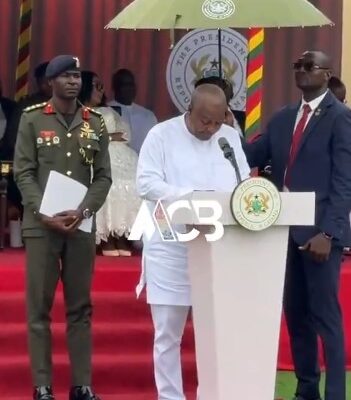
Ghana’s president has delivered a sobering corrective to those who imagine that spiritual devotion can substitute for industrial effort, arguing that the nation’s trajectory toward prosperity demands both a prayerful heart and the calloused hands of hard labour.
President John Dramani Mahama made the exhortation during the 2026 National Day of Prayer convened in Accra on Wednesday, July 1, an occasion that drew together the apparatus of national religious life — clergy of multiple faiths, custodians of traditional authority, elected officials and ordinary citizens assembled to beseech divine favour upon the realm.
The President’s message cut against the grain of a certain piety that treats supplication as substitute for action. Prayer possesses undeniable power, he acknowledged, yet it constitutes an incomplete instrument for national transformation when divorced from the rigor of purposeful labour, the discipline of systematic planning and the accountability that flows from personal responsibility.
Every Ghanaian, Mahama suggested, occupies a role within the machinery of national reconstruction.
The aspirations animating the body politic — economic expansion, social stability, institutional strengthening — cannot materialise through petitionary addresses to the Almighty alone.
They require the mobilisation of human agency: the commitment of individuals to excellence within their spheres, the diligence with which workers approach their tasks, the self-imposed restraint that channels impulse toward productive ends.
Drawing upon scriptural authority, Mahama invoked the Letter of James: “Faith without works is dead.” He extended the principle into economic and governmental terrain, observing that prayer bereft of accountability cannot resurrect a flagging economy, that hope unanchored to discipline cannot generate genuine prosperity.
History furnished examples of the principle in action. When Nehemiah undertook the reconstruction of Jerusalem’s walls, the people did not simply supplicate the heavens — they laboured alongside their prayers, their hands and implements advancing the work their mouths had committed to the divine.
When Joseph positioned Egypt to survive the looming famine, the enterprise succeeded not through faith alone but through the combination of spiritual confidence and administrative foresight, strategic planning and disciplined execution.
The President’s address implicitly challenged Ghanaians to transcend a dichotomy between the sacred and the secular, demonstrating instead that authentic religious conviction manifests itself through worldly diligence and the commitment to excellence in ordinary endeavours.





Popular News
No trending posts found.