
Rising power demand to drive investment, PPPs in energy sector — Expert
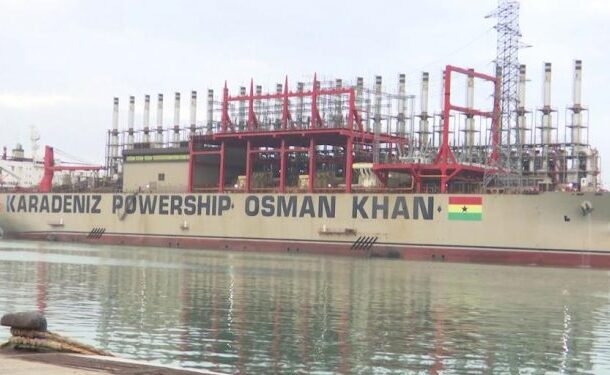
Growing electricity demand is expected to drive the next phase of expansion in Ghana’s power sector, with industry players highlighting private sector investment and public-private partnerships (PPPs) as key to sustaining supply and supporting economic growth.
Electricity demand is projected to increase by about 8 to 10 percent annually, placing pressure on the country to invest across the entire power value chain.
Sector experts say meeting this rising demand will require sustained private sector participation, given the capital-intensive nature of the industry.
Project Manager at Karpowership Ghana, Michelle Hazel, noted that government alone cannot meet the scale of investment needed in power generation and supply.
“As economies grow and populations expand, demand increases. Ghana is no exception, with power demand rising at about 8 to 10 percent annually,” she said.
She emphasised that private sector involvement in the energy space is not only necessary but inevitable due to the significant financial requirements.
“It is a space where the private sector must support government because of the level of investment required,” she added.
According to her, Ghana has made notable progress over the past decade, particularly with the increased participation of independent power producers (IPPs), reflecting improvements in the policy and regulatory environment.
“In the last 10 to 12 years, we have seen the emergence of several IPPs compared to about two decades ago,” she said.
She further indicated that extending private sector participation beyond generation to include transmission and distribution could improve efficiency across the electricity supply chain.
“If private sector efficiency is replicated in transmission and distribution, as seen in generation, it will improve performance across the board,” she noted.
Hazel also pointed to changes in the sector’s fuel mix—especially the shift from expensive liquid fuels to natural gas—as critical to reducing electricity costs and improving sustainability.
“If we are able to develop more indigenous gas, we can achieve cheaper power in the long term,” she said, stressing that reliable and affordable electricity is essential for industrial growth.
Corporate Communications Manager at Karpowership Ghana, Sandra Amartikar Amarquaye, highlighted the role of independent power producers in supporting national electricity supply.
She noted that the company has operated in Ghana since 2015 and relocated from Tema to Sekondi in 2019 to take advantage of natural gas resources.
“We have remained consistent and reliable in supplying power to the national grid,” she said.
Amarquaye added that discussions are ongoing with the government on a possible extension of the company’s 10-year power purchase agreement with the Electricity Company of Ghana.
“We are in talks with the government, and negotiations are progressing positively. We are hopeful of extending the agreement beyond the initial 10-year term,” she said.
As part of efforts to enhance transparency and stakeholder engagement, the company hosted members of the media aboard its floating power plant, the Karadeniz Powership Osman Khan, at the Sekondi Naval Base, offering insight into its operations.






Popular News
No trending posts found.