
Wanlov the Kubolor says his name Owusu-Bonsu reminds him of colonialism and a corrupted African identity
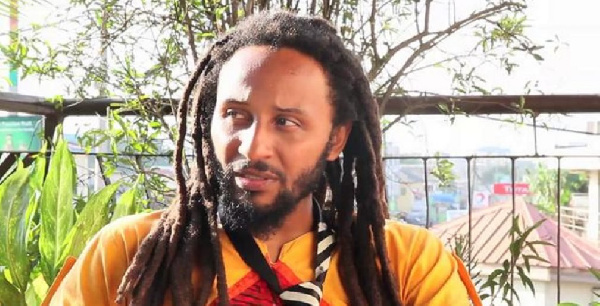
Outspoken musician Wanlov the Kubolor has opened up about his complicated relationship with his birth surname, revealing that hearing the name Owusu-Bonsu in public triggers a sense of unease rooted in what he describes as the colonial distortion of African identity and language.
Speaking in an interview on Asempa FM, the artist — known for his unconventional views as much as his music — described the almost disorienting experience of being called by that name by strangers who have simply looked it up.
“Sometimes when I am in traffic, I hear people shouting ‘Owusu Bonsu,’ and I turn around thinking it might be one of my old schoolmates, but then I realise it is just someone who has learned that is my name,” he said.
For Wanlov, the discomfort runs deeper than mere familiarity — it is rooted in what he sees as the mangling of the name’s authentic pronunciation under colonial influence, a corruption he finds impossible to separate from the name itself.
“When I hear the name, I think about colonialism. They corrupted the pronunciation of my name, so if people pronounce my name the proper way, I would prefer that,” he explained.
The musician also turned his analytical lens on his first name, Emmanuel, offering an interpretation that steps well outside conventional religious understanding. Rather than dismissing the name outright, he said he finds a degree of peace with it through its ancient etymological roots.
“With the ‘Koo Emma,’ I manage it because it has ancient history. ‘Emmanu’ means student and ‘el’ means God, so it means ‘student of God,'” he said, before going further to connect the suffix to celestial symbolism.
“The ‘el’ is also linked to the planet Saturn, so one of the oldest meanings is ‘student of Saturn,'” he claimed, acknowledging that this interpretation diverges sharply from the popular religious reading of the name.
“People take the ‘el’ to mean God, which is why many say Emmanuel means ‘God is with you,’ but I see it more as ‘student of God,'” he added — a characteristically Wanlov take on a subject most people would never think twice about.






Popular News
No trending posts found.