
1D1F no longer exists – Trade Minister confirmes
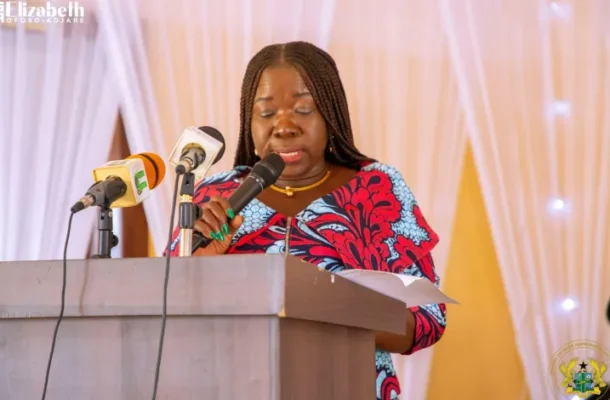
Minister for Trade, Agribusiness and Industry, Elizabeth Ofosu-Adjare, has officially confirmed the discontinuation of the One-District-One-Factory (1D1F) initiative, bringing to an end one of the New Patriotic Party’s signature industrialisation programmes.
Addressing Parliament on Tuesday, July 8, 2025, the Minister stated unequivocally that the policy is no longer in effect and no longer provides incentives to investors.
“Mr Speaker, I want to draw the House’s attention to the fact that as of now, there is no policy as 1D1F,” Mrs Ofosu-Adjare stated on the floor.
Her remarks came in response to a question from Minority Leader Alexander Afenyo-Markin, who had sought clarity on what investment incentives are currently in place to attract private sector involvement,especially in underserved areas and whether new strategies were being developed to reduce industrial risk in the absence of 1D1F.
He also asked whether the ministry was considering new industrial parks as part of a revised investment strategy.
In her response, the Minister outlined a new direction under the government’s flagship 24-hour economy agenda, which she described as the cornerstone of Ghana’s next phase of economic transformation.
“The 24-hour economy policy is the new thing on the block and the game changer, which seeks to make Ghana very vibrant irrespective of the minute of the hour or the time of the day,” she said.
As part of this renewed focus, Mrs. Ofosu-Adjare announced the development of agro-processing parks, a key component of the 24-hour economy framework.
“We are doing agro-parks which seek to be a great game changer especially in the agro-processing zones and it is being worked on to ensure we are able to produce around the clock for import substitution, export, foreign exchange and to create jobs for our teeming youth,” she added.
The 1D1F programme, launched in 2017 by the former NPP administration, aimed to accelerate industrialisation by establishing at least one factory in every district. It sought to transition Ghana’s economy from one based on raw material exports to value-added production and the export of finished goods.
With its termination, the current administration appears focused on reorienting the country’s industrial policy through more targeted, high-impact interventions aligned with broader economic transformation goals.















Comments (0)