
BoG First Deputy Governor highlights importance of global liquidity for economic stability
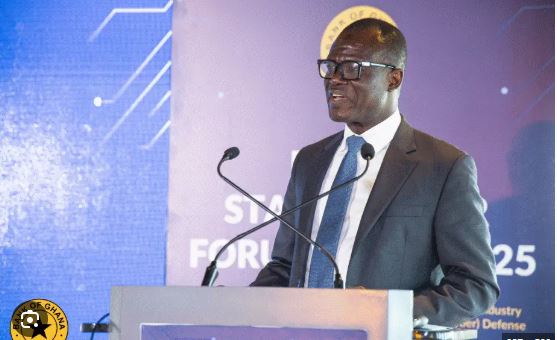
First Deputy Governor of the Bank of Ghana, Dr Zakari Mumuni, has underscored the critical role of global liquidity in shaping the performance and stability of the world economy, describing it as the “connective tissue” that holds global financial systems together.
Speaking at the ACI FMA Congress in Accra, Dr Mumuni explained that global liquidity determines how easily capital flows across borders, how governments finance development projects, how businesses access credit, and how financial systems absorb economic shocks.
He noted that in today’s highly interconnected global environment, liquidity conditions in one region are quickly transmitted across markets and economies worldwide.
According to him, these dynamics have significant implications for emerging and frontier economies, particularly in areas such as exchange rate stability, reserve adequacy, debt sustainability, refinancing conditions, and overall financial stability.
Dr Mumuni explained that during periods of abundant global liquidity, capital inflows into emerging markets tend to increase, but when conditions tighten, those flows can reverse rapidly, often creating serious macroeconomic challenges.
“This reality highlights one important lesson: emerging markets must not only attract capital during favourable periods but must also build the resilience necessary to withstand periods of financial tightening and external shocks,” he said.
He added that the challenge for emerging economies is no longer just access to external financing, but the ability of institutions, markets, and policy frameworks to absorb volatility during periods of global stress.
He further noted that the nature of external financing to emerging economies has evolved significantly, moving beyond traditional bank lending to include portfolio investments, bond markets, foreign direct investment, remittances, and flows from non-bank financial institutions.
While this diversification creates new opportunities, he cautioned that it also increases exposure to external vulnerabilities, as portfolio flows and short-term investments can be quickly reversed during periods of uncertainty.
Dr Mumuni also observed that global financial markets are becoming increasingly sensitive to geopolitical developments and shifts in investor sentiment, further amplifying volatility risks for emerging economies.














Comments (0)