
Volta Region receives 180,000 chicks as Nkoko Nkitinkiti programme takes off
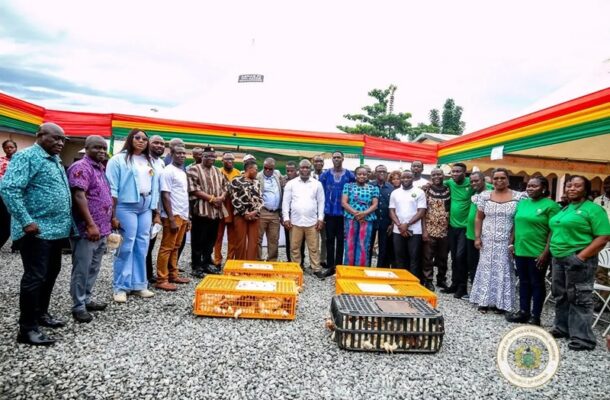
The Volta Regional Minister, James Gunu, has launched the Nkoko Nkitinkiti Programme in the Volta Region under the Government of Ghana’s Feed Ghana Programme, describing it as a major intervention aimed at reducing poverty, creating jobs, improving household incomes and strengthening food security.
Speaking at the launch, the Regional Minister said the initiative goes beyond poultry farming and represents a practical economic empowerment tool for households, youth and aspiring agribusiness entrepreneurs across the region.
According to him, the programme is expected to stimulate local economic activity by creating opportunities across the poultry value chain, increasing domestic food production, and encouraging self-sufficiency among communities.
As part of the rollout, the Volta Region has been allocated 180,000 day-old chicks to support beneficiaries, particularly households and young entrepreneurs seeking sustainable livelihoods through poultry farming.
Mr Gunu expressed confidence that the intervention would provide long-term economic relief to families while promoting self-employment and agribusiness development.
He stated that the Nkoko Nkitinkiti Programme aligns with long-standing community practices in which poultry rearing served as a dependable financial buffer for many households.
Historically, he noted, the sale of a few chickens often enabled families to address urgent financial needs, including payment of school fees, healthcare costs and other household emergencies.
“In many ways, Nkoko Nkitinkiti is a revival of an age-old poverty reduction strategy that empowered families at the grassroots level,” he stated.
The Regional Minister reaffirmed the government’s commitment to agricultural initiatives that directly improve livelihoods and strengthen food security, especially within rural communities.
He further commended stakeholders involved in implementing the programme for their commitment and collaboration, expressing optimism that the intervention would significantly improve livelihoods and contribute to economic growth in the region.
Mr Gunu also urged beneficiaries to take full advantage of the support being provided to ensure the sustainability and long-term success of the initiative.
The Nkoko Nkitinkiti Programme forms part of the broader government Feed Ghana Programme aimed at increasing agricultural productivity, enhancing food availability and creating sustainable economic opportunities nationwide.
Regarded as a flagship intervention under the Feed Ghana Programme, the initiative is designed to boost domestic poultry production, improve food sovereignty and create sustainable employment opportunities.
The programme also seeks to address Ghana’s heavy dependence on imported frozen chicken, which has historically cost the country more than $350 million annually, by stimulating both household and commercial poultry production.
Under the initiative, the government plans to distribute three million birds to 60,000 households across all 276 constituencies nationwide, with each constituency expected to receive 10,000 birds.
Through the Household/Backyard Poultry Initiative, participating households will receive 50 chicks, feed support and technical guidance to help them transition from subsistence farming into self-sustaining poultry enterprises.
In addition, the programme will support 50 selected commercial anchor farmers, each expected to receive up to 80,000 chicks, housing and logistical support to produce poultry at scale and strengthen supply chains between producers and processors.
The government believes the intervention will not only reduce the country’s poultry import burden but also create employment opportunities and improve incomes, particularly among rural households and young people entering agribusiness.












Comments (0)