
Special Auditors’ Court won’t end Financial Malfeasance — Dr Richmond Atuahene
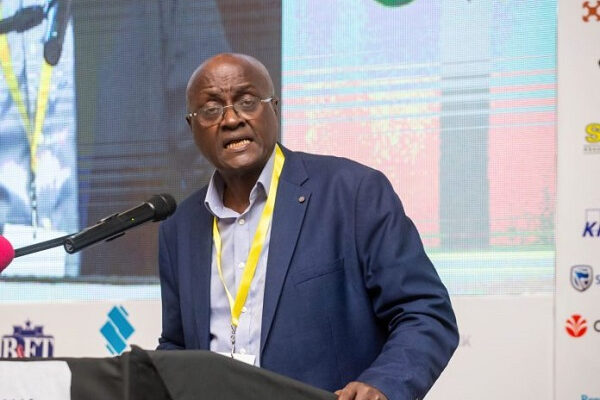
Banking consultant Dr. Richmond Atuahene has questioned the government’s proposal to establish a specialized court for auditors, arguing that strengthening internal controls and institutional capacity would be a more effective way to combat financial malfeasance in Ghana’s public sector.
Speaking on Starr FM’s Morning Star programme on June 15, 2026, Dr. Atuahene expressed doubts about the effectiveness of the proposed court, which was recently announced by Finance Minister Cassiel Ato Forson as part of efforts to improve accountability and oversight within public financial management systems.
According to Dr. Atuahene, Ghana should focus on addressing systemic weaknesses rather than creating new judicial structures.
“I don’t know where this one is coming from. Have they looked at the Constitution?” he questioned.
He explained that the Constitution already provides for the adjudication of financial crime cases through the existing judicial system, including the High Court, Court of Appeal, and Supreme Court.
The banking consultant further highlighted challenges within the country’s justice system, noting that financial crime cases often take years to be resolved.
“It’s not the court that matters. There are weaknesses and internal weaknesses in the systems,” he stated.
Dr. Atuahene stressed that before establishing a specialized court, authorities must first ensure the availability of adequately trained professionals capable of handling complex financial and audit-related cases.
“If you are setting up a special court, you first need to build capacity. Capacity means: do we have lawyers who are well versed in finance, accounting and auditing? And do we have judges who have been trained?” he asked.
He argued that creating a new court without addressing existing skills and competency gaps would do little to solve the problem of financial misconduct.
“You don’t set up another court when you don’t even have the competencies, the skills and the abilities,” he said.
Instead, he called on policymakers to strengthen internal control mechanisms within public institutions and improve operational systems to reduce opportunities for financial wrongdoing.
“We need to look at the entire operational system and build strong internal controls so that we can reduce these malfeasances,” he advised.
Responding to a question on whether systemic reforms would be more effective than dedicating a court to audit-related offences, Dr. Atuahene agreed, maintaining that courts alone cannot eliminate financial misconduct.
“Someone commits financial malfeasance in an institution and then goes to court. I have never seen anywhere in the world where the court alone can solve financial malfeasance at a go,” he stated.
According to him, addressing financial irregularities requires long-term institutional reforms, stronger accountability systems, and improved governance practices rather than relying solely on legal processes.
He warned that without tackling the root causes of corruption and financial misconduct, cases will continue to emerge regardless of the existence of a specialized court.






Popular News
No trending posts found.