
Mahama orders drafting of State asset protection bill, unveils Anti-Corruption reform agenda
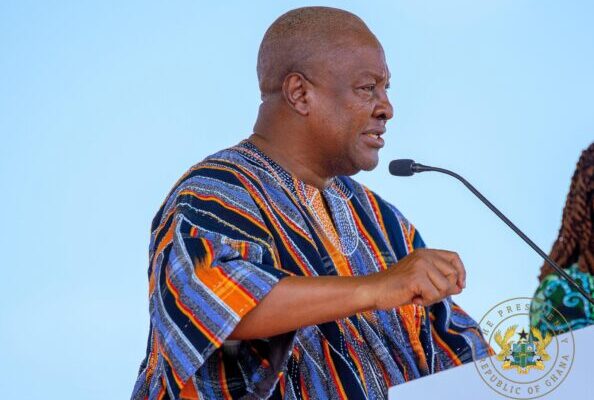
President John Dramani Mahama has instructed the Attorney-General and Minister for Justice to prepare a State Asset Protection Bill for submission to Parliament, as part of broader efforts to safeguard public property and strengthen accountability in governance.
He also revealed that Cabinet has approved a revised National Ethics and Anti-Corruption Action Plan covering the next five years, which will be laid before Parliament for consideration and adoption.
Speaking at the opening of the 4th Ghana Civil Society Forum in Accra, President Mahama said the proposed legislation is intended to regulate the disposal of state assets and prevent arbitrary or improper transfers by public officials.
According to him, the Bill will establish clear procedures governing how state property—including lands, buildings, factories, and other public investments—can be sold or transferred.
“It will provide guidelines under which any state assets can be disposed, including lands, buildings, factories, and industries, so that no government capriciously disposes of state assets,” he stated.
The forum, organised by Star-Ghana, was held under the theme “Reimagining Partnerships for Democratic Consolidation and Inclusive Development”. It brought together civil society organisations such as the Institute of Democratic Governance (IDEG), the Centre for Democratic Development (CDD-Ghana), the Ghana Anti-Corruption Coalition, and Transparency International Ghana.
President Mahama reaffirmed his administration’s commitment to transparency, accountability, and inclusive governance, stressing the importance of civil society in strengthening democratic institutions.
He noted that in the face of shrinking development financing, Ghana must build resilient domestic systems capable of sustaining development outcomes regardless of global economic conditions.
To that end, he outlined four proposed “development compacts”: enhanced domestic resource mobilisation, stronger state institutions as democratic anchors, improved accountability for development results, and deeper partnerships that promote local ownership of development processes.
He further challenged African countries to rethink their development strategies beyond reliance on external assistance.
“For too long, Africa’s development conversation has often been framed around what external partners can do for us. The changing global environment must now push us to ask: what can we do for ourselves?” he said.
President Mahama also emphasised the need for innovative financing models, including support for local philanthropy, social enterprises, impact investment, diaspora contributions, and private sector participation.
He assured that government remains committed to creating an enabling policy environment that promotes innovation, transparency, and sustainable financing aimed at reducing dependence on foreign aid.
“The objective is clear: to build institutions capable of sustaining development long after external support has dried up,” he added.
Convener of the forum, Alhaji Ibrahim Tanko, noted that changing global conditions require civil society organisations to reassess their strategies and responses.
While acknowledging Ghana’s reputation as a model of democratic governance in Africa, he cautioned that underlying challenges still require urgent and collective attention from all stakeholders.




Popular News
No trending posts found.