
Any Deal For Chairman Wontumi Must Come With Prison Time or Fines, Says Political Analyst Kennedy
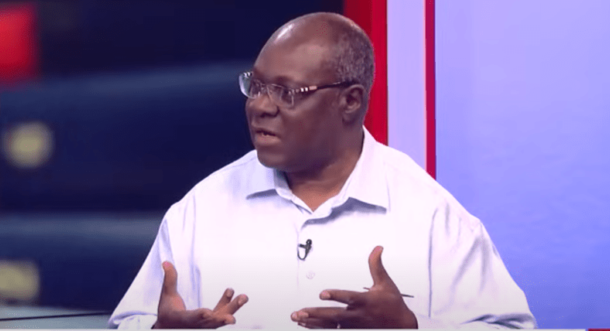
Political analyst Dr. Arthur Kennedy has thrown down a marker in the debate surrounding reported plea negotiations involving Ashanti Regional NPP Chairman Bernard Antwi-Boasiako, insisting that any settlement reached must carry real consequences — whether through jail time or financial penalties — rather than allowing the accused to walk away untouched by the law.
While Dr. Kennedy conceded that the Attorney-General is within his rights to pursue negotiated settlements in criminal cases, he drew a firm line at what such settlements should look like. To permit someone to simply return money and escape all punishment, he argued, would undermine the entire purpose of the criminal justice system.
Speaking on Newsfile on Saturday, he voiced concern that Ghana’s approach to justice should not discriminate based on a person’s wealth or political connections.
“A nation that deals with fowl thieves and cassava thieves should not let big people go free when they commit crimes,” he said, underlining his belief that the law must be applied with uniform force across all strata of society.
He acknowledged that plea bargains serve a practical function, trimming both the time and expense involved in prosecuting complex cases. However, he cautioned that efficiency should never come at the cost of ensuring wrongdoers face some form of sanction.
To illustrate his point, he drew a comparison with the American legal system, where plea arrangements typically result in reduced sentences rather than the complete evasion of punishment. A crime that might otherwise result in a life sentence could yield a negotiated outcome of 10 or 15 years — a significant reduction, but punishment nonetheless.
“A plea deal in the United States, for example, means that if this might have led to imprisonment for life, it may lead to, say, 10 or 15 years’ imprisonment. In other words, you might get a lesser sentence when you do a plea deal, but it does not mean that if you clearly committed a crime, you can walk away scot-free,” he explained.
Dr. Kennedy also sounded a note of caution against prejudging anyone before the legal process has run its course, reaffirming that every person accused of a crime carries the presumption of innocence until such time as a court or agreement determines otherwise. That principle, he stressed, should not be abandoned simply because questions are being asked.
“So one should not presume anybody guilty. He’s innocent until proven guilty. He should be able to engage, but I think that some kind of custodial sentence or criminal penalties must be on the table,” he concluded.






Popular News
No trending posts found.