















Ghana cedi weakens against major currencies despite $1bn forex support
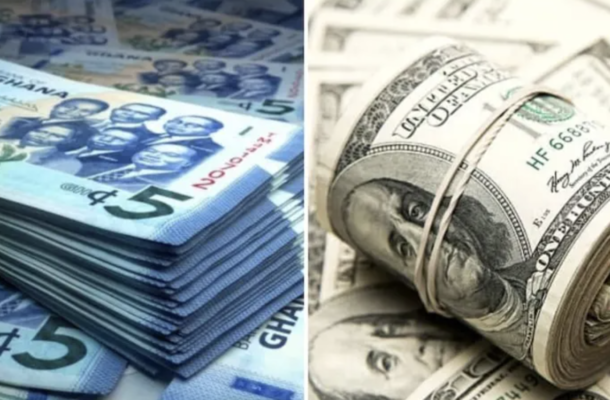
The Ghana cedi recorded modest losses on the interbank market over the past two weeks but remained broadly stable across the retail foreign exchange segment.
The currency fell by 0.47% against the US dollar, 1.36% against the pound sterling and 1.58% against the euro in interbank trading. It ended the period at mid-market rates of GH¢11.69 to the dollar, GH¢15.74 to the pound and GH¢13.46 to the euro.
Activity among retail market participants was subdued. The cedi edged down by 0.21% against the US dollar, trading at GH¢12.13 to one US dollar. The pound and euro were largely unchanged, at GH¢16.05 and GH¢13.70 respectively.
The latest movement comes after the cedi lost 2.91% against the US dollar in July 2026 on a month-on-month basis. That decline reversed the currency’s 3.35% appreciation in June.
The July weakening occurred despite the Bank of Ghana providing an estimated US$1.0bn in foreign exchange support during the month. That intervention was lower than the US$1.2bn supplied in June 2026.
Databank Research said the performance was broadly consistent with its previous forecast, with the dollar remaining range-bound between GH¢11.60 and GH¢11.70 during the period under review.
“Over the next fortnight, the Bank of Ghana’s US$1.0 billion August FX [foreign exchange] intermediation, alongside the recent US$371 million IMF ECF disbursement, should provide a useful liquidity buffer and anchor market expectations. However, we still expect underlying pressure from commercial demand and energy-related imports to keep the cedi on a mild weakening path”, it added.
The research firm said the latest measures should help keep volatility contained in the near term. It expects gains in the US dollar against the Ghana cedi to be limited near GH¢11.85, while support for the cedi is projected around GH¢11.40 to the US dollar.
The August foreign exchange intervention by the Bank of Ghana, together with the recent US$371m disbursement under the International Monetary Fund’s Extended Credit Facility, is expected to provide additional liquidity to the market and help shape expectations.
However, Databank Research warned that demand from commercial operators and the cost of energy-related imports could continue to place gradual pressure on the cedi. Those factors are expected to keep the currency on a mild weakening trend, even as official support limits sharper movements.
The cedi started the week at GH¢12.15 against the US dollar.
Despite the recent losses, its year-to-date gain remained at 0.41%.






Popular News
No trending posts found.