















Ghana infrastructure spending shortfall threatens long-term growth, ISSER warns
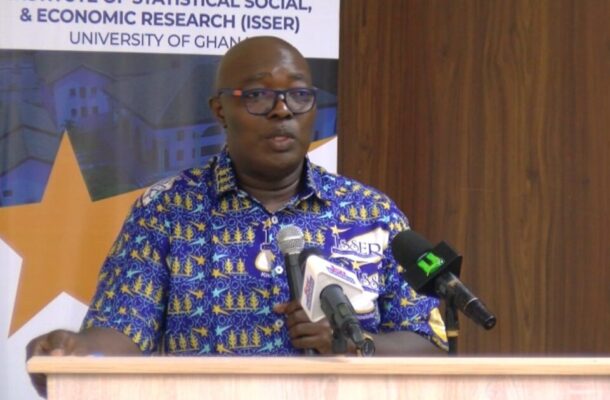
Ghana risks undermining its long-term development ambitions if spending on infrastructure continues to fall below target, the Institute of Statistical, Social and Economic Research (ISSER) has warned.
The institute said tight expenditure controls and delays to projects under the government’s “Big Push” infrastructure programme had weakened capital investment during the first half of 2026.
Presenting ISSER’s review of the 2026 Mid-Year Budget Statement and Economic Policy in Accra, its director, Professor Robert Darko Osei, acknowledged that Ghana was making significant progress towards macroeconomic stability.
But he cautioned policymakers against allowing fiscal consolidation targets to come at the expense of investments that support economic growth.
The government’s fiscal strategy was intended to create room for higher capital expenditure. However, ISSER found that actual spending during the first six months of 2026 remained well below the level that had been programmed.
Capital expenditure was nearly 40% lower than planned, making it the weakest-performing part of government spending over the period.
ISSER attributed much of the gap to strict controls on expenditure and delays in putting infrastructure projects into effect. The institute said those delays meant planned investments had not yet delivered the economic benefits expected from them.
Many of the projects remained at preparatory stages, limiting their contribution to economic growth and reducing the immediate effect of the infrastructure programme.
The slowdown was also apparent in Ghana’s construction industry. The sector expanded by only 1.3% during the first quarter of 2026, despite expectations that major public infrastructure works would provide a significant boost to activity.
Prof. Osei said capital expenditure was central not only to infrastructure development but also to industrialisation, productivity improvements and employment creation.
“Capital expenditures are critical for growth, sustainability and the achievement of development targets,” he said.
He warned that maintaining tight restrictions on spending for too long could weaken the investment required to transform Ghana’s economy and increase its productive capacity.
That risk comes as the country continues to make progress with its fiscal consolidation programme, creating what ISSER described as a policy tension between economic stabilisation and growth.
Prof. Osei called for a more balanced approach, with fiscal discipline maintained without undermining projects that could strengthen the economy over the longer term.
“Public investment plays a vital role in creating the conditions that attract private capital, promote economic diversification and strengthen productive sectors,” Prof. Osei added.
ISSER also urged the government to improve the efficiency and sequencing of public investment projects. In its view, better planning and implementation would help ensure that limited public resources produced the greatest possible developmental impact.
The institute’s review warned that Ghana’s efforts to improve its fiscal position should not weaken the country’s broader development and economic transformation agenda.
It called on policymakers to protect the role of public investment in supporting growth, while ensuring that infrastructure projects are delivered effectively and at the appropriate pace.



Popular News
No trending posts found.