














Ghana summit highlights company secretaries’ role in creating corporate value
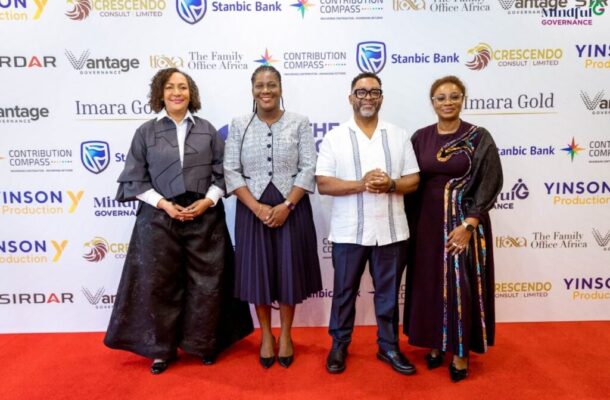
Accra, 31 July – Company secretaries must play a central role in improving board effectiveness and corporate decision-making, speakers told the inaugural Company Secretaries’ Summit in Ghana.
Organised by Mindful Governance, the one-day event brought together company secretaries, legal counsel, board directors and senior governance professionals to examine how stronger governance can support organisational performance and long-term value creation.
Held under the theme “Governance as Value Creation”, the summit focused on elevating the responsibilities of company secretaries and strengthening their contribution to the work of boards and senior management.
The event concluded with awards recognising six professionals for their contribution to corporate governance across the private sector, public sector and emerging professional categories.
Mrs Helen Amponsah Asare of KGL Group of Companies Limited and Mrs Paulina Akosua Danso, Esq. of The Royal Senchi received the Company Secretary of the Year (Private Sector) award.
The Rising Star (Emerging Professional) award was presented to Mrs Gertrude Assan, Esq. of Mainstream Reinsurance Limited and Mrs Bernice Yaa Sika Afful of First Atlantic Asset Management.
Mrs Trudy Lamptey of Labadi Beach Hotel and Mrs Susan Gbemu of Ghana National Gas Limited Company were named joint recipients of the Board Secretary of the Year (SOE/Public Sector) award.
Mrs Catherine Engmann, Founder and Managing Director of Mindful Governance, said the winners had shown how effective governance could become a driver of organisational performance.
She added that the Company Secretaries’ Summit and Awards would become an annual fixture on Ghana’s corporate governance calendar. The event, she said, would provide a national platform for recognising and discussing the work of company secretaries, whose responsibilities were closely linked to board effectiveness and organisational success.
“Company secretaries operate at the intersection of boards, management and stakeholders,” Mrs Engmann said, explaining that they helped influence the quality of corporate decisions by determining how and when important matters were brought before boards.
She said the summit had also created an opportunity for board directors and company secretaries to examine governance challenges and improve cooperation between them.
AI and the future of governance
Mrs Maame Samma Peprah, Registrar of Companies, said artificial intelligence could strengthen compliance monitoring, board administration and regulatory analysis, but could not take the place of professional judgement, ethical leadership or independence.
She warned that organisations introducing emerging technologies needed comprehensive governance frameworks to ensure innovation was used responsibly and generated lasting value.
Effective corporate governance should be viewed as a competitive advantage capable of boosting investor confidence, she said, rather than simply as a legal or regulatory obligation.
Mr Karl George, Founder and Chief Executive Officer of Governance AI, called on boards and governance professionals to improve their understanding of artificial intelligence so they could provide responsible oversight.
He outlined the “three As” of AI adoption automation, augmentation and agency and identified the increasing use of unauthorised “shadow AI” tools by employees as a significant governance risk for organisations.
Mrs Charlotte Kesson-Smith Osei, Chief Executive Officer of Cyrus Law, urged businesses to move away from viewing governance as a compliance burden.
Describing governance as the “steering wheel” that allowed organisations to make sound and sustainable decisions, she said corporate failures often occurred when important voices were ignored or left out of boardroom discussions.
She stressed the importance of creating environments where constructive debate was encouraged and critical views could be considered.
The summit also held sector-specific breakout sessions involving private sector organisations, state-owned enterprises and governance service providers. Participants used the sessions to discuss emerging governance risks, challenges and best practice.
By Edward Dankwah
Ghana News Agency
Edited by Audrey Dekalu






Popular News
No trending posts found.