
Mudslide tragedy and floods ravage Cape Coast as relentless rains expose city’s infrastructure fragility
A catastrophic mudslide has claimed the life of a toddler and left three women fighting for their lives in Cape Coast, while torrential rainfall across the city has laid bare the fragility of its drainage systems and urban planning.
The dual disaster unfolded on Friday, June 19, when a hillside in the Tantri neighbourhood suddenly gave way, sending a torrent of earth and rock cascading down onto residential dwellings positioned below the slope. The collapse occurred at approximately 4:45 p.m., crushing structures beneath tonnes of debris.
Four people were trapped in the rubble: Elizabeth Kyerede, 43; Maame Badua, 25; Ella, 17; and Hanson Mensah, a 20-month-old boy. Local residents mobilised immediately, extracting all four from beneath the wreckage and rushing them to Ewim Polyclinic.
Upon arrival at the health facility, Hanson Mensah could not be saved and was declared deceased. Ella, bearing a severe cranial injury, was subsequently transferred to Cape Coast Teaching Hospital for specialised treatment. The two adult women remain under care for injuries sustained in the collapse.
Family patriarch Richard Joachim characterised the event as unprecedented in the community’s living memory. Residents, he said, had never witnessed a mudslide of comparable magnitude. The four victims had sought shelter together in a single room when the hillside suddenly gave way, burying the building beneath earth and stone.
When neighbouring relatives heard the thunderous sound of the collapse, they rushed outside to discover portions of their home entombed in mud. The immediate community response prevented what could have been an even greater tragedy — two adjacent structures, fortunately unoccupied at the moment of impact, were also engulfed.
The Ghana National Fire Service arrived subsequently to support ongoing emergency operations. The Metropolitan Chief Executive, George Justice Arthur, visited the grieving family to express official condolences.
A City Drowning
The mudslide was merely one manifestation of a broader crisis unfolding across Cape Coast as unrelenting rainfall inundated the city from early morning through successive hours on June 19.
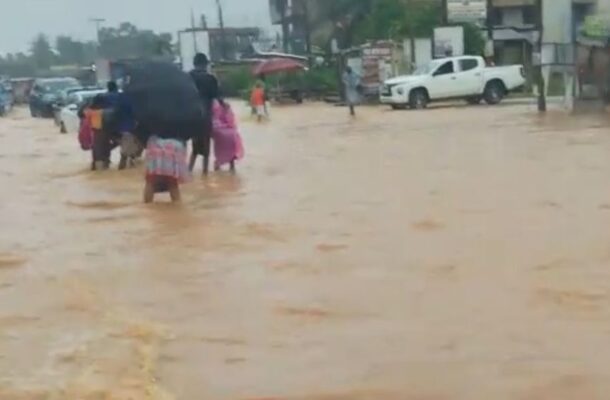
Beginning at 7:00 a.m., the deluge persisted for extended periods, transforming roads into rivers, infiltrating homes and submerging public spaces. Movement through the metropolis became perilous for both those behind the wheel and those on foot.
Multiple neighbourhoods bore the brunt of the inundation: the Electricity Company of Ghana compound, the vicinity surrounding the Cape Coast Sports Stadium, stretches of the route leading toward Cape Coast Teaching Hospital, the Ghana National College area, and the University of Cape Coast all found themselves underwater.
Arterial roadways disappeared beneath floodwaters, ensnaring motorists in gridlock as traffic crawled to a standstill. Commuters desperately sought alternate passages, while others found themselves stranded on waterlogged streets with no way forward.
The University of Cape Coast’s sprawling campus bore particular suffering, with affected zones including the expanse behind the Sandwich Lecture Block, the Science Roundabout, the Zenith Bank precinct, Ayensu, and portions of Sasakawa. Alarmed by the rising waters and the hazards posed by submerged pathways, university leadership issued a directive instructing students and personnel to shelter indoors and minimise unnecessary transit.
Many residents characterised the event as among the most punishing rainfall episodes of recent memory. Pedestrians waded waist-deep through floodwaters en route to workplaces, educational institutions and commercial establishments.
The corridor servicing Cape Coast Teaching Hospital became a bottleneck as submerged pavement forced vehicles into a crawl, with queues extending through peak periods.
The Sports Stadium locale and its neighbouring communities languished under standing water that lingered in streets and open areas long after precipitation had ceased.
The economic toll was immediate and tangible. Merchants postponed shop openings, while others lamented a sharp drop in customer footfall as residents found movement around the city nearly impossible.
Root Causes and Calls for Action
Those living through the catastrophe pinpointed longstanding systemic failures: obstructed drainage channels, antiquated and insufficient drainage infrastructure, and haphazard urban expansion in vulnerable zones.
Voices from across affected neighbourhoods have grown urgent in their calls for municipal authorities to prioritise drain desilting campaigns and invest in enduring drainage remediation. With the rainy season yet to reach its peak intensity, residents express dread that worse flooding lies ahead without swift intervention.





Popular News
No trending posts found.