
Plastic producers to be held accountable under new waste legislation
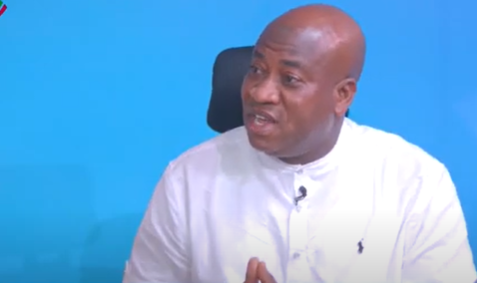
The Government of Ghana is developing new legislation that will require plastic producers to contribute financially to the collection and recycling of plastic waste, according to the Minister of Environment, Science and Technology, Dr. Murtala Muhammed.
Speaking at the opening of the 2025 Environmental Sustainability Summit (ESS), Dr. Muhammed revealed that the upcoming law will introduce a mandatory Extended Producer Responsibility (EPR) framework. The initiative aims to shift part of the waste management burden onto manufacturers, drawing lessons from successful models in Kenya, South Korea, and the European Union.
The legislation forms part of a broader national effort to tackle Ghana’s mounting plastic pollution crisis. It follows a government decision to phase out the importation and production of Styrofoam plastics, which President John Dramani Mahama recently described as a “major contributor to environmental degradation.” The President noted that the Ministry of Environment would collaborate with manufacturers and importers to ensure a smooth transition to sustainable alternatives.
Ghana generates approximately 1.1 million tonnes of plastic waste annually, but more than half of it goes uncollected, and only about 9 percent is recycled, according to official estimates.
Dr. Muhammed warned that the environmental and economic costs of inaction are staggering. “Our current approach is costing the economy over US$56 billion each year, nearly 11 percent of GDP,” he said. He added that the country’s “take, make, use, and discard” model has led to a sharp rise in consumption—from 5.7 kg per capita in 1990 to 7.4 kg in 2017.
Despite having policies such as the National Plastics Management Policy and the Hazardous and Electronic Waste Control Act, the minister admitted that enforcement remains weak, responsibilities are fragmented, and overall planning is insufficient.
To reverse the trend, Dr. Muhammed outlined the government’s vision for a circular economy—a system where resources are reused, waste is minimized, and the environment is protected.
“Ghana’s circular economy roadmap identifies six priority sectors, including plastics, and proposes cross-sector solutions to drive innovation and reduce environmental pressure,” he explained. “We are not just following global movements; we are helping shape them,” he added, referencing Ghana’s active participation in initiatives such as the African Circular Economy Alliance, the Global Plastic Action Partnership, and ongoing UN plastics treaty negotiations.
Transitioning to circular practices, he projected, could boost Ghana’s GDP by 1.9 percent by 2030, representing nearly €1.9 billion, while saving between €200 million and €300 million in imports. He also highlighted the potential to create over 60,000 green jobs in recycling, innovation, and sustainable manufacturing.
“Failure to act will only worsen environmental degradation, raise healthcare costs, and hinder growth in sectors like tourism and agriculture,” he cautioned.
This year’s ESS-2025, organized by the Business and Financial Times (B&FT) under the theme “Ending Plastic Waste in Ghana: A Sustainable Future for All,” brought together stakeholders from across the public and private sectors.
In his welcome remarks, B&FT CEO Dr. Godwin Acquaye emphasized the widespread use of plastic across Ghana—from sachet water to packaging—and its devastating environmental consequences.
“This plastic menace clogs our drains, causes flooding like what we witnessed in Accra in 2023, and harms fisheries and tourism,” Dr. Acquaye said.
He acknowledged the progress made through initiatives like the National Plastics Management Policy and Ghana’s involvement in the Global Plastic Action Partnership. He also highlighted the GEF-funded circular economy framework, which targets zero plastic leakage into water bodies by 2040.
Efforts are also underway to improve waste segregation, collection systems, and recycling infrastructure in line with international standards, he added.
Dr. Acquaye cited the example of Trashy Bags Africa, a private-sector innovation that has repurposed over 30 million plastic sachets into functional items such as bags and school supplies.













Comments (0)