
Cabinet Approves Landmark Reforms to End Presidential Appointment of District Chief Executives
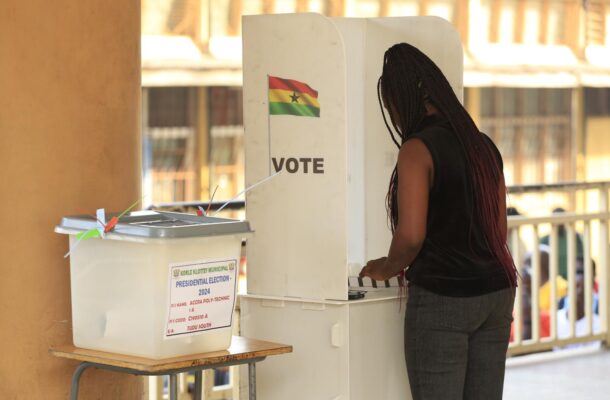
Cabinet has given the green light to sweeping reforms that will fundamentally reshape how Ghana’s local government system operates, with the most significant change being the abolition of the long-standing practice of presidential appointment of Metropolitan, Municipal and District Chief Executives.
The Executive Secretary of the Inter-Ministerial Coordinating Committee on Decentralisation, Dr Gameli Kewuribe Hoedoafia, disclosed the details of the new National Decentralisation Policy and Strategic Framework covering the period 2026 to 2030, revealing that district chief executives will for the first time be directly elected by citizens on a non-partisan basis.
Dr Hoedoafia indicated that the current batch of MMDCEs appointed by President John Dramani Mahama would in all likelihood be the last to be installed under the existing constitutional arrangement.
The reforms seek to amend Article 243(1) of the 1992 Constitution, which presently empowers the President to appoint MMDCEs subject to approval by two-thirds of assembly members.
Under the proposed changes, that power would transfer entirely to the electorate.
The decision to pursue a non-partisan system was deliberate, he explained, with nationwide consultations revealing that most Ghanaians wanted local government elections kept free from partisan political influence.
Constitutional amendments, referenda, and related processes have been scheduled between 2027 and 2029 to pave the way for the elections.
New Local Governance Law
Alongside the electoral reforms, the Local Governance Act, 2016 (Act 936) is currently under review, with a new bill expected to be laid before Parliament before the end of 2026 and potentially enacted into law by the first quarter of 2027.
Dr Hoedoafia said nearly a decade of implementation had exposed weaknesses in the existing legislation that necessitated a comprehensive overhaul.
A key feature of the proposed new law is the integration of spatial and development planning functions at the district assembly level, addressing the fragmentation that has long hampered efficiency and coordination in local governance.
Accountability and Funding
The reforms also introduce stronger accountability mechanisms at the local level. A dedicated local accountability platform, modelled on Parliament’s Public Accounts Committee, would be established to require MMDCEs and other duty bearers to publicly account for how resources are used in their districts.
Stricter criteria would additionally be applied to the appointment of the 30 percent government nominees to district assemblies, to ensure the positions serve a technical rather than a political function.
On funding, the policy proposes raising the constitutional minimum allocation to the District Assemblies Common Fund from five percent to 7.5 percent, taking a gradual approach rather than the ten percent recommended by the Constitutional Review Commission.
The reforms represent the most ambitious overhaul of Ghana’s decentralisation framework in decades, with officials describing them as a decisive step toward deepening democratic governance and improving service delivery at the grassroots level.













Comments (0)