
Stop pointing fingers at politicians alone for being corrupt – Apostle Eric Nyamekye
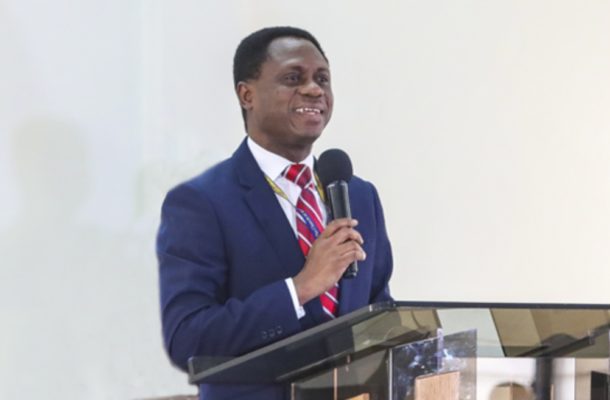
A prominent ecclesiastical voice has delivered a stinging rebuke to citizens who habitually deflect blame for national dysfunction toward political elites, arguing that collective culpability demands collective accountability from a populace that outnumbers its leadership by millions.
Apostle Eric Nyamekye, heading the Church of Pentecost, delivered his exhortation during proceedings at the 2026 National Day of Prayer convened in Accra on Wednesday, July 1, his words directed at a nation that has grown comfortable scapegoating its governors while evading scrutiny of its own ethical compromises.
Nyamekye posed a mathematical reality designed to discomfit his audience: Ghana’s political apparatus comprises a minuscule fraction of the national population.
How many government functionaries and elected officials exist within a nation of 35 million souls? A few thousand at most — insufficient in number to impose their will upon the entire country unless vast majorities of ordinary citizens enabled their malfeasance through complicity or apathy.
The Pentecost Chairman drew upon biblical precedent, invoking the exhortation to “seek the peace and prosperity of the land” — language that distributes responsibility across the entire body politic rather than concentrating it within governmental precincts.
National transformation, he argued, cannot be parcelled out as a problem for politicians to solve while citizens remain passive observers.
His indictment deepened when he examined the religious composition of the nation. Seventy-one per cent of Ghanaians claim Christian faith — a figure that should translate into corresponding ethical practice, institutional integrity and resistance to corrupt arrangements.
Yet corruption persists, Nyamekye observed, which implies that a substantial portion of those claiming Christian identity must themselves be participating in, tolerating or benefiting from the very systems they denounce when politicians engage in them.
“We are making a mistake by always blaming politicians. How many are they? What about the millions of us? Our forebears did not think the way we are thinking in our generation.
How can these few people determine our destiny? Seventy-one percent of us claim to be Christians. If we are not part of the corruption, how could we have felt it?” he questioned.
While acknowledging that political leadership exercises measurable influence upon national trajectories, Nyamekye argued that the ultimate determinant of institutional health resides in the character and conduct of citizens themselves.
Leaders succeeding or failing in their duties does so against a backdrop of the ethical environment citizens have cultivated through their own daily choices.
He therefore appealed to Ghanaians to embody integrity within their individual spheres, to prioritise patriotic duty over personal enrichment, to exercise accountability in transactions both small and consequential.
Such character, multiplied across millions, would reshape the moral ecology within which political actors operate — rendering certain forms of corruption impossible simply because the citizenry would refuse to accommodate them.




Popular News
No trending posts found.