
Akosombo switchyard fire caused by insulation failure, not Sabotage – Committee
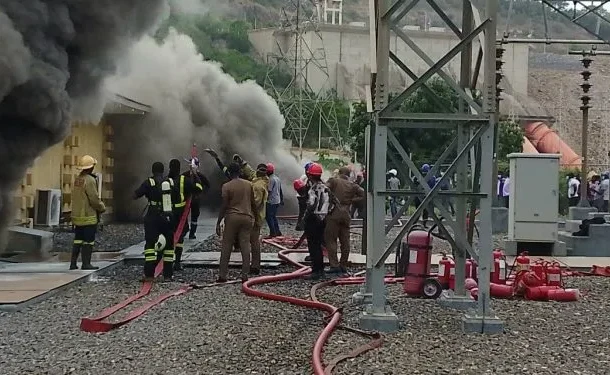
The fire that occurred at the Ghana Grid Company Limited (GRIDCo) Akosombo Switchyard, which disrupted power supply from the Akosombo Generating Station to the national grid, was caused by insulation failure and not by any deliberate human action, according to the findings of a committee established to investigate the incident.
The committee, chaired by Ing. Dr. William Amuna, Board Chairman of the Electricity Company of Ghana (ECG) and former Chief Executive Officer of GRIDCo, officially presented its report to the Minister for Energy and Green Transition, Dr. John Abdulai Jinapor, on Thursday, June 11, 2026.
Presenting the findings, Dr. Amuna stated that the fire was solely caused by insulation failure and not by any individual deliberately operating equipment or interfering with the system.
The fire occurred on April 23, 2026, and triggered widespread power supply disruptions across several parts of Ghana.
The investigative committee was constituted on April 24, 2026, a day after the incident, to determine the cause of the fire and recommend measures to prevent similar occurrences in the future.
The report ruled out sabotage, arson, or any deliberate human interference, bringing clarity to concerns that emerged in the aftermath of the incident.
The findings are expected to guide future investments and operational improvements within the country’s power transmission network, particularly as demand for reliable electricity continues to grow.
Presenting the report to the Minister, Ing. Dr. Amuna highlighted a number of recommendations aimed at strengthening GRIDCo’s operational capacity and reducing the risk of future incidents.
Among the key recommendations is the establishment of an additional control centre to complement the existing facility and improve redundancy within the national transmission system.
The committee believes that creating a backup control centre would enhance GRIDCo’s ability to respond effectively to emergencies and maintain uninterrupted operations in the event of equipment failures or other unforeseen disruptions.












Comments (0)