
Climate change is now a national development issue – Finance Ministry advisor
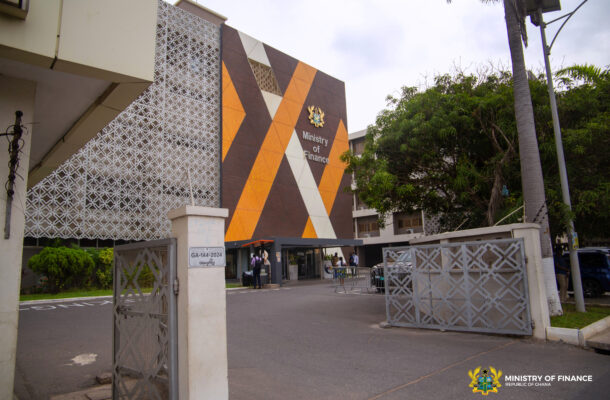
Technical Advisor at the Ministry of Finance, Frederick Amissah, has described climate sustainability as a national development priority, warning that climate change is increasingly affecting Ghana’s economy, public finances and long-term growth.
Speaking at the launch of the Ghana Sustainable Finance Roadmap on Tuesday, June 30, 2026, Amissah said climate change is no longer solely an environmental issue but one that is reshaping economic planning, infrastructure development, food production and investment decisions.
“Climate sustainability is a macroeconomic issue, a financial stability issue, a competitiveness issue and, above all, a national development issue,” he stated.
Amissah referenced the recent floods that claimed nine lives, describing them as a stark reminder of the human and economic consequences of climate change. He observed a moment of silence in honour of the victims before highlighting the growing financial burden extreme weather events place on the country.
He explained that the economic impact of climate-related disasters is reflected directly in government spending and the broader economy.
“When floods wash away roads, the cost appears in the budget. When droughts affect crop yields, the cost appears in food inflation and headline inflation. When coastal erosion threatens communities, the cost appears in public investment plans,” he said.
Amissah stressed that Ghana’s financial sector must play a more active role in supporting climate adaptation and resilience, arguing that investment decisions should balance financial returns with long-term sustainability.
“Today, Ghana is saying with a loud voice that the financial architecture must support the future resilience of this country. Capital must not only seek returns; it must build resilience,” he noted.
He praised the collaborative efforts of the Bank of Ghana, the Securities and Exchange Commission, the National Insurance Commission and other regulatory institutions in developing the Ghana Sustainable Finance Roadmap.
He also acknowledged the contribution of the International Finance Corporation (IFC) in supporting the preparation of the framework.
According to Amissah, Ghana has already made significant progress in promoting sustainable finance through initiatives such as the Bank of Ghana’s Sustainable Banking Principles and the Ministry of Finance’s Green Finance Taxonomy.
“Ghana is not starting from zero. We have already taken steps to ensure our financial system is resilient and supports our sustainability goals,” he said.
He urged banks, investors and policymakers to move beyond policy commitments and integrate sustainable finance principles into everyday decision-making.
“This must be a call to action. When banks are lending, we must ask whether they are taking sustainable finance into consideration. The decisions we make today will determine how resilient Ghana becomes in the face of climate change,” he added.





Popular News
No trending posts found.