
David Adjaye defends National Cathedral as tallest building in Accra
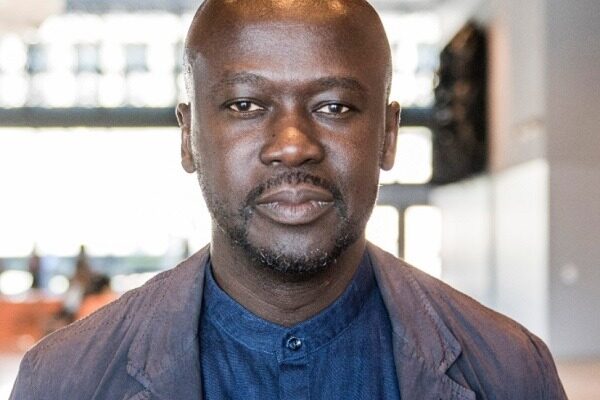
The lead architect of the controversial National Cathedral project, Sir David Adjaye, has mounted a robust defense of the stalled development, dismissing claims that it represents the world’s most expensive “hole” and arguing that the project has been widely misunderstood by critics and sections of the media.
Speaking during a public engagement, the internationally acclaimed Ghanaian-British architect challenged descriptions of the project by international media organizations which have highlighted the estimated $97 million already spent on the unfinished structure, saying that the building was designed to make it the tallest building in the capital.
Responding to a question from a journalist on whether Ghana should reconsider the project given the controversy surrounding it, Sir David Adjaye insisted that the National Cathedral should not be reduced to the excavation site that has become a symbol of political debate.
“People keep pointing fingers and calling it the most expensive hole in the world, but that building, at the cost it is today, would cost about a billion dollars to construct in the West,” he argued. “In fact, many countries in the West would struggle to build such a structure because of the high cost of labour and construction.”
According to Adjaye, Ghana has a unique opportunity to create world-class architecture at a relatively lower cost due to local labour advantages and the country’s growing technical capabilities.
He explained that the vision behind the National Cathedral extends far beyond the construction of a place of worship, stressing that the project was conceived as a national landmark and economic asset capable of transforming Ghana’s tourism sector.
“The mistake people make is to think of it simply as a cathedral,” he said. “If you think of it only as a church building, then you miss the bigger picture.”
The architect revealed that extensive research informed the design concept, particularly studies into religious tourism, which he described as one of the most reliable and productive contributors to national economies around the world.
He noted that for more than 2,000 years, religious sites have attracted millions of pilgrims and tourists who travel specifically to destinations with spiritual significance.
Such visitors, he argued, often contribute significantly to local economies while maintaining respectful relationships with host communities.
“There are many forms of tourism, but religious tourism remains one of the most enduring. These are the kinds of visitors countries want because they bring economic activity and help drive development,” Adjaye explained.
He maintained that the National Cathedral was envisioned as a major tourism destination for Ghana and Africa, capable of attracting visitors from across the continent and beyond.
Beyond its religious significance, Adjaye disclosed that the proposed complex was designed to include a wide range of facilities intended to serve educational, cultural and economic purposes.
The project, according to him, incorporates a music school, a library, chapels for smaller worship services, a conference centre, a Bible museum and a biblical research centre.
He said the Bible museum, in particular, would preserve and showcase the history of Christianity in Ghana and Africa, including the often-overlooked contributions of early missionaries and local scholars who translated the Bible into indigenous Ghanaian languages such as Twi.
“There is a whole history of Christianity in Ghana and Africa that many people do not know about. The project was intended to tell that story and preserve that heritage,” he said.
Adjaye further described the cathedral as a symbol of engineering innovation and architectural excellence that would continue the nation-building aspirations that characterized Ghana’s early post-independence era.
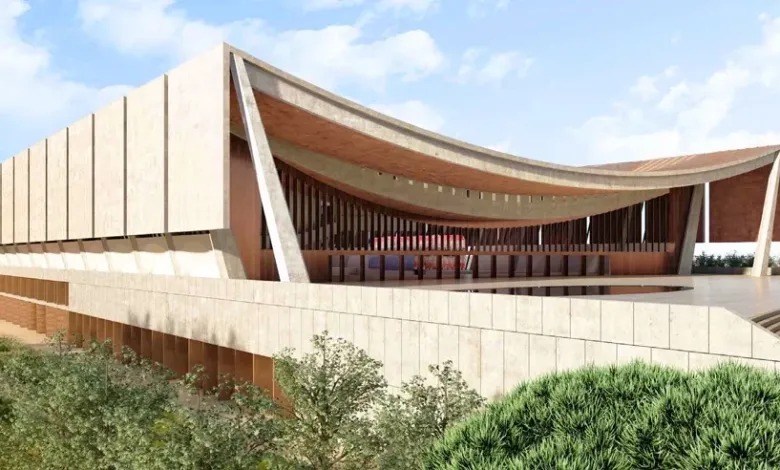
He disclosed that although many people perceive the cathedral as an ordinary structure, its final design would make it one of the most dominant landmarks in the capital city.
According to him, the elevated podium supporting the structure would ensure that the cathedral becomes visible from several parts of Accra, making it an iconic national symbol.
“It would be the highest building in Accra. The podium elevates the structure so that it becomes visible across the city,” he stated.
The architect argued that the cathedral would eventually stand as a representation of Ghana’s identity as a predominantly Christian nation, noting that approximately 70 percent of Ghanaians identify as Christians.
The National Cathedral project has remained one of the most politically contentious infrastructure initiatives in the recent history.
The project was initiated under the administration of former President Nana Addo Dankwa Akufo-Addo following a pledge he made after winning the 2016 presidential election. The government presented the cathedral as a national Christian monument intended to serve as a centre for worship, state ceremonies and religious tourism.
However, the project has faced sustained criticism over its funding, procurement processes and escalating costs.
Opposition politicians, civil society groups and some religious leaders have questioned the expenditure of public resources on the project, particularly amid Ghana’s economic challenges.
The controversy intensified after reports indicated that approximately $97 million had been spent on the project despite construction remaining incomplete.
Critics frequently referred to the excavation site as the “world’s most expensive hole,” a phrase that gained traction in political discourse and public debate.






Popular News
No trending posts found.