




Dr Nya Kwiawon Taryor remembered as Liberian educator, writer and progressive
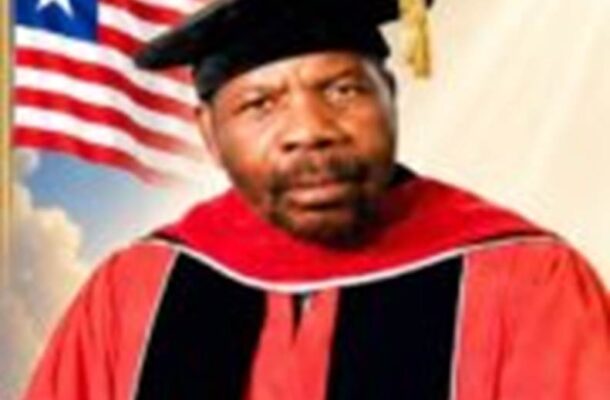
Dr Nya Kwiawon Taryor, a respected Liberian educator, theologian, author and leading member of the Movement for Justice in Africa (MOJA), has died in the United States aged 79.
Taryor spent many years in America writing and publishing, while remaining committed to improving the lives and political understanding of the Liberian people. His death was announced with sadness by a childhood friend, who described him as one of Liberia’s committed progressives.
Born in Nimba County in 1947, Taryor attended the College of West Africa (CWA), where he completed his secondary education. He later earned a bachelor’s degree from Cuttington College in Liberia before obtaining a Ph.D from Smith University in the United States.
Education remained central to his life. He became professor emeritus at Cuttington College and president emeritus at the Gbarnga School of Theology. He also lectured in theology, ethics and biblical studies.
Taryor was a regular contributor to Focal on Liberia, a United States-based news network. In its tribute, the network said: “his services extended beyond academia. As a former national coordinator of the United Methodist Church in Liberia, he helped shape the moral and spiritual development of young Liberians during critical movements in our nation’s history. Even in retirement, he never truly retired from service. He devoted his later years to writing, publishing, and helping Liberians and international authors bring their works to the world –a testament to his lifelong belief that ideas have the power to transform societies.”
Before his death, Taryor used Focal on Liberia to examine the country’s history from the 1920s to 1980. He divided the period into four sections: Charles King’s presidency from 1920 to 1930; Edwin Barclay’s administration from 1930 to 1944; William Tubman’s rule from 1944 to 1971; and William Tolbert’s government from 1971 to 1980.
He described 1920-1980 as the final years of Americo-Liberian rule and the period of Liberia’s First Republic. While recognising the achievements of those administrations, he also highlighted what he regarded as some of their gravest failures.
Those included the forced labour and enslavement of native Liberians to Fernando Po during the Charles King administration, the burning of Sasstown villages and killing of their people during Edwin Barclay’s presidency, the suppression of multi-party democracy under William Tubman and opposition to social justice during William Tolbert’s government.
Taryor warned that Liberia must not repeat those actions if it was to become a developed, united and peaceful country. He argued that the roots of injustice went back beyond the 1920s, to Liberia’s independence in 1846, when the new Republic denied citizenship to native people and subjected them to suppression and injustice. His message was that all Liberian citizens should be treated equally and fairly. The discussion remains available on YouTube.
During the 1970s, Taryor became an important figure in the struggle for the liberation of the Liberian people. As a senior member of MOJA, he used his teaching skills to explain citizens’ rights and the organisation’s campaign for justice.
His work reflected what he called “Liberation Theology”, a doctrine of mental and spiritual freedom. Advocacy for social justice contributed to the military overthrow of the Tolbert government on 12 April 1980.
Taryor’s 1983 book, “Justice, Justice: A cry of my people,” explored both Liberia’s political struggle and the work of MOJA. He also wrote Liberia: Facing Mount Nimba. Both books presented aspects of the Liberian experience and history.
Despite his influence, Taryor did not seek the public recognition enjoyed by other progressive figures during and after the revolution. He was remembered as private, practical and effective, communicating in simple English rather than relying on complicated political language or revolutionary slogans.
His childhood friend met him in the early 1960s when they were dormitory mates at the Methodist Boys Hostel at CWA. Taryor, who was known as Lawrence at school, was quiet but active after arriving from Nimba. He was not an athlete, although he enjoyed sport, and was regarded as a strong academic student.
His classmates included current Liberian President Joseph Boakai, Johnnie Weefur, Rupel Marshall, Benjamin Dugbe and the late Eugene Peabody. More than 75% of the students who were on campus at the time have since died, including Sylvester Grigsby, who passed away the previous year.
The friendship continued beyond their schooldays. When Taryor’s friend considered travelling to America to continue his high school education, he encouraged him to believe the opportunity was possible. At Taryor’s suggestion, the two men prayed and fasted for several days. About three months later, the opportunity arose, prompting them to embrace and give thanks to God.
They reunited in Washington, DC, in 1979 while taking part in a mass demonstration against the Tolbert government’s massacre of the April 12, 1980 rice protesters. The meeting brought together two former school friends who had become progressive comrades campaigning for multi-party democracy and justice in Liberia.
Taryor died in America and is survived by three children. His family and friends have been offered condolences, while calls have been made for established Liberian progressives to pay tribute to a man remembered as a fallen great writer, educator and comrade.



Popular News
No trending posts found.