















Ghana targets 10% renewable energy share by 2030, says Energy Minister
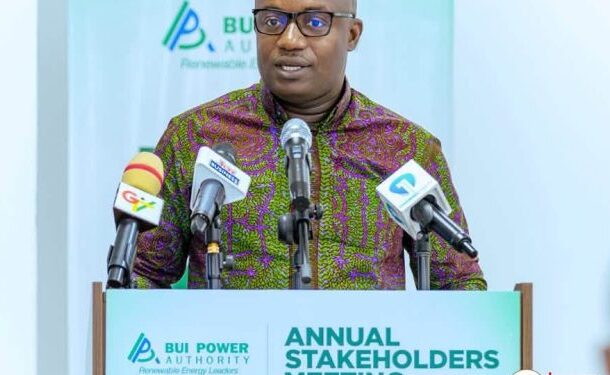
Ghana’s government is reaffirming its commitment to increasing the country’s renewable energy penetration to at least 10% by 2030, while warning that stronger financial discipline will be essential to the energy sector’s future.
Minister for Energy and Green Transitions John Jinapor said the target could only be achieved through sustained policy, regulatory and investment support. He said that backing would be needed to speed up clean energy development, reinforce the electricity grid and secure the sector’s long-term financial sustainability.
Mr Jinapor made the remarks at the Annual Stakeholders Meeting of the Bui Power Authority (BPA), where the Authority’s recent performance was reviewed and participants discussed steps towards creating a more resilient, sustainable and low-carbon energy sector.
The minister praised the BPA for what he described as an outstanding performance in 2025. He highlighted the Authority’s success in exceeding its clean energy generation target, increasing its solar capacity and commissioning battery energy storage facilities.
He also pointed to the BPA’s strong financial results and excellent safety record, saying its performance showed the significant role renewable energy could play in meeting Ghana’s future energy requirements.
“As Government works towards achieving at least 10% renewable energy penetration by 2030, we remain committed to providing the policy, regulatory and investment support needed to accelerate clean energy development, strengthen our electricity grid and ensure a financially sustainable energy sector,” he said.
However, Mr Jinapor stressed that investment in renewable energy and other areas of the sector would need to be matched by more effective revenue collection and careful financial management.
He said stronger payment discipline throughout the energy value chain would be necessary to protect the sector’s long-term viability and allow further investment in essential infrastructure.
“This must be complemented by improved revenue collection, prudent financial management and stronger payment discipline across the energy value chain to safeguard the sector’s long-term sustainability and enable continued investment in critical infrastructure,” he said.
The minister said the government would continue working with stakeholders across the industry to establish the conditions required for renewable energy expansion.
That work, he said, would also have to address the financial and infrastructure difficulties facing the energy sector. The government’s approach would therefore focus not only on increasing the amount of clean energy generated, but also on ensuring that the systems supporting the sector remained financially and operationally resilient.
The BPA meeting provided an opportunity for stakeholders to consider the Authority’s contribution to Ghana’s energy transition and to discuss measures aimed at strengthening the sector over the longer term.
Mr Jinapor’s comments underline the government’s view that renewable energy growth must be supported by sound regulation, investment and a reliable electricity grid. At the same time, improved revenue collection, responsible financial management and consistent payments across the energy value chain will be required if the sector is to remain sustainable while critical infrastructure investment continues.





Popular News
No trending posts found.