
Ghana-China trade reaches record US$14.1bn in 2025
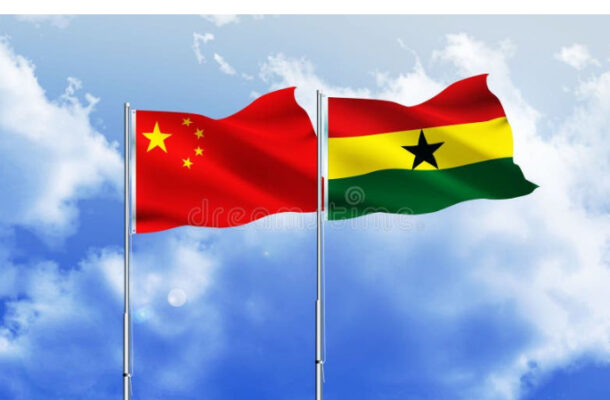
Bilateral trade between Ghana and China reached a record US$14.1 billion in 2025, representing a 19.3 per cent increase compared to the previous year.
The growth highlights the strengthening economic relationship between the two countries and further cements China’s position as Ghana’s largest trading partner and a key source of foreign investment.
Speaking at his first official press briefing in Accra on Monday, Cong Song described Ghana-China relations as broad, dynamic and strategically aligned, particularly as both nations pursue major economic transformation agendas.
According to him, while China is implementing its 15th Five-Year Plan centred on high-quality development, technological innovation and industrial modernisation, Ghana is focused on economic recovery and industrial expansion through the government’s “24-Hour Economy” and “Resetting Ghana” programmes.
“China and Ghana share highly compatible development philosophies, and the prospects for cooperation in various fields are broad,” he stated.
Mr Cong noted that Ghana’s economy had shown signs of strong recovery, recording six per cent Gross Domestic Product growth in 2025, with inflation reportedly falling to 3.4 per cent by April 2026.
He attributed the rise in bilateral trade partly to growing Chinese investments in sectors including mining, energy, manufacturing, aviation and construction.
According to the Ambassador, Chinese-backed mining companies, power plants, oil refineries, airlines, steel factories, ceramic firms and cement manufacturers have established a strong presence in Ghana, creating thousands of jobs and supporting industrialisation efforts.
He added that the investments were also contributing to government efforts to promote locally manufactured goods and stimulate long-term economic recovery.
Mr Cong further stated that China was prepared to deepen cooperation with Ghana through increased investment, technology transfer and industrial partnerships.
He explained that China intended to support Ghana’s industrial transformation drive, including the proposed Volta Economic Corridor project, which is expected to create opportunities in manufacturing, logistics and trade.
The Ambassador noted that China’s strengths in capital, technology and industrial development align with Ghana’s resource potential and development priorities.
He said both countries were also exploring ways to strengthen industrial value chains through the processing of agricultural products and the promotion of local manufacturing.
Mr Cong also highlighted China’s zero-tariff policy for products from 53 African countries with diplomatic relations with China, including Ghana.
The policy, which took effect on May 1, 2026, removes import duties on Ghanaian exports to China such as cocoa products, cashew, shea butter, textiles and handicrafts.
According to him, the initiative is expected to reduce export costs for Ghanaian businesses, improve competitiveness in the Chinese market and attract more investment into local processing industries.
He explained that Ghanaian cocoa previously attracted tariffs ranging between eight and 22 per cent, but can now enter the Chinese market duty-free under the new arrangement.
Mr Cong said the policy would help diversify Ghana’s exports, create jobs and expand opportunities for small and medium-scale enterprises.
He also underscored the importance of cultural and educational exchanges in strengthening relations between the two countries.
The Ambassador disclosed that more than 10,000 Ghanaian students are currently studying Chinese language and culture, while several exchange programmes have been planned under the 2026 China-Africa Year of People-to-People Exchanges initiative.
According to him, nearly 600 exchange activities involving youth, media, tourism, arts and governance will be organised across Africa this year to deepen cultural cooperation and understanding.
Touching on illegal mining, popularly known as galamsey, Mr Cong reaffirmed China’s support for Ghana’s efforts to tackle the menace and protect the environment.
He stressed that the Chinese government opposes the involvement of Chinese nationals in illegal mining and has consistently urged its citizens abroad to respect the laws of host countries.
The Ambassador also appealed to the Ghanaian media to report fairly and comprehensively on Ghana-China cooperation and the contributions of Chinese businesses operating in the country.
He expressed optimism about the future of bilateral relations, stating that the growing partnership between Ghana and China would continue to create opportunities for trade, investment, industrialisation and sustainable development.












Comments (0)