
Ghana targets investment-grade credit rating within three years – Ato Forson
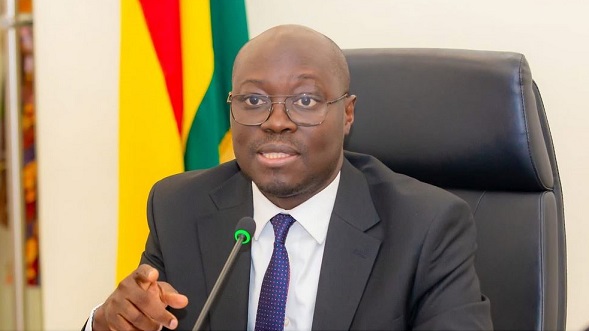
Ghana is aiming to regain investment-grade credit status within the next three years as part of a broader strategy to strengthen fiscal credibility, restore investor confidence, and sustain the country’s economic recovery following the 2022 debt crisis.
Finance Minister, Dr. Cassiel Ato Forson, disclosed this in an interview with Bloomberg on the sidelines of the Ghana-UK Investment Summit 2026 in London, where he outlined the government’s medium-term plans for maintaining macroeconomic stability and rebuilding Ghana’s reputation in international financial markets.
According to Dr. Forson, Ghana has made considerable progress in recovering from the economic challenges that led to the country’s sovereign debt default in 2022, resulting in the loss of access to international capital markets and a series of credit rating downgrades.
“We have successfully moved from an unsustainable debt position to a moderate risk of debt distress,” he stated.
The Finance Minister explained that while key economic indicators point to a recovering economy, the government remains focused on ensuring that the recovery is sustainable and recognized by global investors as a sign of long-term economic stability.
He acknowledged that some investors remain cautious due to the effects of the 2022 crisis, which was marked by high inflation, currency depreciation, rising debt servicing costs, and extensive debt restructuring.
“Some investors remain cautious because of what happened in 2022. We need to send a clear signal that stability is here to stay,” Dr. Forson said.
He emphasized that restoring confidence in Ghana’s economic management will require continued fiscal discipline, consistent policy implementation, and sustained structural reforms.
As part of efforts to reinforce investor confidence, Dr. Forson revealed that Ghana is nearing the completion of its current programme with the International Monetary Fund (IMF), with the final review awaiting approval by the IMF Executive Board.
He added that the government intends to transition to a Policy Coordination Instrument (PCI) arrangement with the IMF once the current programme concludes. Unlike traditional IMF programmes, the PCI does not provide direct financial support but serves as a framework for monitoring reforms and ensuring policy discipline.
Dr. Forson described the proposed arrangement as a key credibility-enhancing mechanism that would help strengthen confidence among investors and development partners.
“Ghana has emerged from a difficult period. What we need now is to demonstrate that stability is sustainable,” he noted.
The Finance Minister said achieving investment-grade status would mark a significant milestone in Ghana’s economic recovery, enabling the country to access international capital markets at lower borrowing costs and attract long-term institutional investors.
Although Ghana remains in speculative-grade territory following the debt crisis, Dr. Forson said recent gains in debt sustainability and macroeconomic management have created a strong foundation for future credit rating upgrades.
He stressed that attaining investment-grade status within the targeted period would depend on maintaining fiscal discipline, implementing structural reforms, and ensuring policy consistency.
Dr. Forson identified reforms in state-owned enterprises and the energy sector as critical to addressing long-standing fiscal challenges. He said government is working to improve efficiency, reduce financial risks, and strengthen governance across public institutions while maintaining prudent fiscal management.
“We are putting in place reforms that ensure fiscal discipline is maintained over time,” he said.
According to the Minister, the objective extends beyond reducing debt levels to addressing the structural weaknesses that have historically placed pressure on public finances.
He further highlighted efforts to strengthen Ghana’s resilience against future economic shocks, citing improvements in the country’s external position driven by strong gold and cocoa exports as well as increased oil production.
These developments, he said, have contributed to stronger foreign exchange reserves, improved currency stability, and enhanced the country’s ability to withstand global economic uncertainties.
“The objective is to ensure that Ghana remains stable, predictable and attractive to investors in the long term,” Dr. Forson stated.
He expressed confidence that sustained reforms, sound economic management, and strategic partnerships would position Ghana to regain investment-grade status and achieve stronger, more sustainable economic growth in the years ahead.












Comments (0)