
GHS confirms no cholera outbreak yet after floods
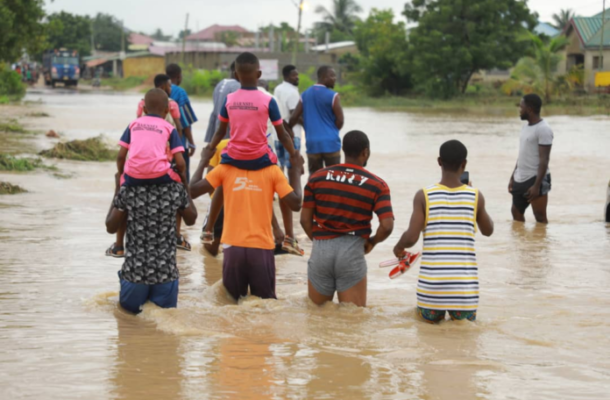
Ghana’s public health apparatus has managed to forestall epidemic disease transmission in the immediate aftermath of the June deluge, yet officials acknowledge that the window for preventive intervention remains narrow as stagnant water, compromised sanitation infrastructure and accumulated refuse create ideal pathways for pathogenic proliferation.
The Ghana Health Service disclosed that no confirmed cholera cases have emerged despite meteorological conditions that typically precipitate waterborne disease outbreaks.
That absence of infection, however, should not breed complacency. Prevention remains cheaper and more effective than responding to established epidemiological crises.
“Fortunately, as of now, we don’t have any registered cholera outbreak. But prevention is key. We don’t need to wait for an outbreak before acting.
Treatment is extremely costly,” stated Dr Samuel Kaba Akoriyea, the GHS Director-General, his remarks calibrated to balance reassurance with urgency.
Health authorities have escalated interventions beyond the environmental cleanup campaigns that occupied the preceding week.
Disinfection and fumigation operations have commenced at multiple public locations, including Tema Station Market and the Adabraka Polyclinic.
The exercise represents the second phase of post-flood disease mitigation, following directly upon the national cleaning campaign that prioritised drainage restoration and refuse removal.
The disinfection strategy targets disease-causing organisms inhabiting public spaces — pathogens that threaten to catalyse cholera, typhoid and diarrhoeal illnesses if left unchecked.
The Ghana Health Service collaborated with the Korle Klottey Municipal Assembly and sanitation partner LCB Worldwide to execute the operation, reflecting the multi-institutional coordination necessary for comprehensive disease prevention.
“After cleaning, the next step is disinfection and fumigation to avoid outbreaks of cholera, typhoid and other illnesses,” Dr Akoriyea explained, positioning fumigation as logical institutional progression rather than preliminary intervention.
The epidemiological threat animating these interventions remains tangible.
The June floods left behind landscapes characterised by stagnant water accumulating in depressions and flood-damaged structures. Drainage channels remain partially compromised by accumulated sediment and debris.
Heaps of refuse and decomposing organic material provide substrate for pathogenic multiplication.
Health authorities have simultaneously counselled the public regarding personal protective practices. Households should prioritise safe drinking water, eschewing consumption from sources potentially contaminated by floodwater.
Personal hygiene disciplines — handwashing, sanitation facility use, food handling protocols — constitute individual-level defences against disease transmission.
“The public to continue observing good sanitation practices, including proper waste disposal, safe drinking water practices and personal hygiene, to prevent the spread of diseases,” the GHS urged.
The convergence of disease risk and institutional response efforts demonstrates the reality that post-disaster public health threats often exceed the immediate trauma of the meteorological event itself.
Infectious disease capacity to kill exceeds flood mortality when prevention lapses and epidemiological conditions favour pathogenic proliferation.





Popular News
No trending posts found.