
US, Iran exchange missile strikes as Gulf tensions escalate
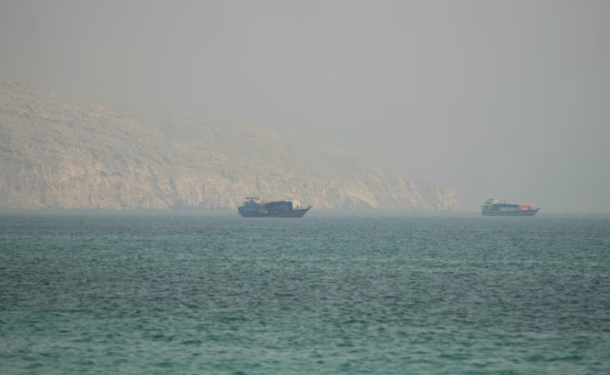
The United States and Iran have intensified military hostilities after exchanging a series of missile and drone strikes, with Tehran targeting American facilities across the Gulf following its announcement that it had once again closed the strategic Strait of Hormuz.
A series of attacks between the U.S. and Iran over the past several days led President Donald Trump to declare the end of a ceasefire meant to halt the fighting that the U.S. and Israel began on February 28, though Trump has left the door open to continued negotiations.
The escalation followed several attacks on commercial ships in the area. Iran said it had closed the strait after firing a warning shot that struck a vessel traveling on an unapproved route, and said on Sunday it had disabled a second vessel.
The strait will remain closed until “the end of U.S. interference in this region,” Iran’s Revolutionary Guards said.
U.S. Central Command, however, said commercial vessels continue to transit through the waterway that carried one-fifth of the world’s oil and LNG shipments before the war.
Central Command said U.S. forces hit 140 Iranian military targets on Saturday, out of more than 300 during three nights of strikes “to degrade Iran’s ability to attack civilian mariners and commercial vessels freely transiting the strait.”
In response, the Guards said they had destroyed a command and control center and drone hangars at U.S. ally Jordan, targeted a U.S. radar site in Kuwait, attacked U.S. aircraft carrier support and refueling platforms in Oman and destroyed a jet maintenance centre and command facility in Qatar.
Qatar’s government said three people, including a child, had been injured by falling shrapnel from the attack.
The United Arab Emirates said its defense systems engaged missiles and drones from Iran, while warning sirens sounded in Bahrain and explosions were heard in Doha. Tehran’s strikes marked a sharp escalation in pace and targets, after it had warned that any retaliation over the container ship incident would be met with a “severe response.”
In recent weeks, Iran had hit Kuwait and Bahrain while avoiding Qatar since early April and the UAE since early May. Sunday’s attack on Qatar targeted a state whose mediation efforts have been central to attempts to broker a ceasefire between the U.S. and Iran – and Doha has previously said it would not act as a mediator so long as it was under attack.
The war has destabilized the Gulf, while Iran’s effective blockade of the strait has caused energy prices to surge, fuelling global inflation. Higher prices, especially for gasoline, are politically sensitive for Trump ahead of November congressional elections.
‘Iran’s Foreign Minister Abbas Araqchi has accused the United States of violating the ceasefire agreement. “There can only be mutual compliance,” he wrote on X on Friday. On Sunday, Iran’s top negotiator Mohammad Baqer Qalibaf posted on X: “The era of one-sided deals is OVER. We told you: keep your word or pay the price. Reality is knocking.”
Source: Reuters






Popular News
No trending posts found.