
Government tackling decline in Ghana’s crude oil production – Energy Minister
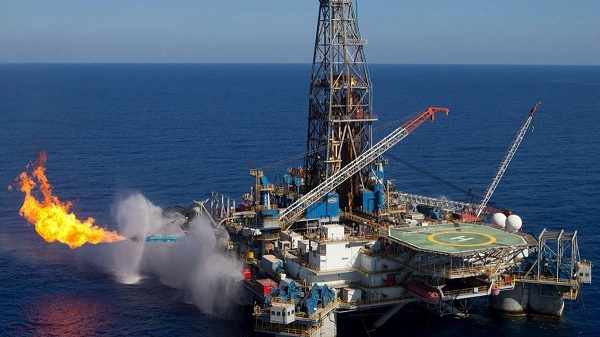
The Minister for Energy and Green Transition, Dr John Jinapor, has stated that government is implementing measures to reverse the decline in Ghana’s crude oil production through renewed partnerships and targeted investments in the upstream petroleum sector.
In a Facebook post after accompanying President John Dramani Mahama on his “Resetting Ghana Tour” of the Savannah Region, Dr Jinapor said ongoing reforms are aimed at restoring growth and ensuring long-term sustainability in the oil sector.
“In the upstream petroleum industry, we are actively addressing the several years’ decline in production through strategic reforms, renewed partnerships, and targeted investments aimed at restoring growth and long-term sustainability,” he wrote.
His comments come amid concerns raised in the 2025 annual report by the Public Interest and Accountability Committee (PIAC), which shows that Ghana’s crude oil production has continued to fall for the sixth consecutive year.
According to PIAC, output declined from a peak of 71.44 million barrels in 2019 to 37.3 million barrels in 2025, representing an average annual decline of about nine percent.
The report warned that the trend confirms the long-held view that Ghana’s oil fields may have peaked and are now on a steady decline.
PIAC presented its findings at a two-day engagement with journalists on Saturday, May 16.
The committee has recommended that the Petroleum Commission develop a framework to attract more investment into existing producing fields, particularly the Tweneboa Enyenra Ntomme (TEN) field.
It noted that production from the TEN field, operated by Tullow Oil, has consistently fallen short of projections. Output has dropped from over 40,000 barrels per day in 2017 to about 16,000 barrels per day in 2025.
The report also stated that no drilling or completion activities were carried out on the field during the year, while about 81 percent of produced gas was reinjected due to geological constraints.
PIAC further highlighted the high fixed costs associated with leasing the FPSO Prof. John Evans Atta Mills as a major factor affecting the field’s profitability.
However, joint venture partners — including Tullow Oil, GNPC/Explorco, Kosmos Energy, and PetroSA — signed a $205 million agreement in February 2026 to acquire the FPSO, a move expected to reduce lease costs and extend the field’s lifespan to 2040.
The report cautioned, however, that the FPSO, built in 1998, will be nearly 30 years old by the time of transfer in 2027.
PIAC also noted that the government owes about US$50 million in TEN-specific development debt to Tullow, alongside other gas payment arrears.
It urged the Petroleum Commission to review the field’s cost history, subject the FPSO acquisition to independent scrutiny, and ensure transparent reporting on production optimisation and future drilling plans.















Comments (0)