
Justice Srem-Sai’s social media post sparks speculation ahead of Wontumi court ruling

With the High Court expected to deliver its judgment on July 3 in the criminal trial involving Ashanti Regional New Patriotic Party (NPP) Chairman Bernard Antwi-Boasiako, popularly known as Chairman Wontumi, a fresh political controversy has emerged over social media activity by Deputy Attorney-General and Minister of Justice, Dr. Justice Srem-Sai.
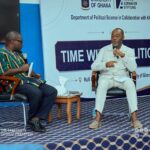
The controversy follows a Facebook post by Dr. Srem-Sai, in which he appeared in a white outfit and shared a photograph that some political observers and supporters of Chairman Wontumi have interpreted as a celebratory gesture ahead of the highly anticipated court ruling.
The post has triggered speculation among sections of the opposition NPP, with some party communicators questioning whether certain political actors may already know the outcome of the case before the court officially pronounces judgment.
Among those raising concerns are supporters of Chairman Wontumi, who argue that the timing of the Deputy Attorney-General’s social media activity has created perceptions of political triumphalism surrounding a case that remains before the courts.
They contend that public officials directly associated with prosecutions should exercise caution in their public communications to avoid creating impressions that could undermine public confidence in judicial independence.
The concerns have been amplified by comparisons to events surrounding the removal of former Chief Justice Gertrude Araba Esaaba Sackey Torkornoo in 2025.
Critics point to a social media post made by former Auditor-General Daniel Domelevo on September 1, 2025, in which he wrote, “We have nailed it,” shortly before the announcement of the outcome of proceedings involving the former Chief Justice.
Some NPP figures argue that the sequence of events in that instance has heightened their suspicions regarding political signals allegedly being sent ahead of major decisions.
Supporters of Chairman Wontumi claim that the latest social media post by Srem-Sai fits a similar pattern and have questioned whether the upcoming judgment is already known within political circles.
However, no evidence has been publicly presented to support claims that the court’s verdict has been predetermined or improperly influenced.
The debate comes against the backdrop of a politically charged legal battle that has attracted national attention.
Chairman Wontumi and Akonta Mining Company Limited have been standing trial over allegations that they permitted unauthorized mining activities on a concession in Samreboi without the approvals required under the mining laws.
Throughout the proceedings, the prosecution presented multiple witnesses in support of its case, while the defence mounted a vigorous challenge to the evidence.
Several moments during the trial generated public discussion, including testimony from prosecution witness Michael Gyedu Ayisi, who admitted under cross-examination that he had no documentary evidence proving that Chairman Wontumi assigned the mining concession to Henry Okum.
The defence repeatedly argued that the prosecution failed to establish a direct link between Wontumi and the alleged unauthorized mining activities.
Lawyers for the accused also challenged the credibility and sufficiency of portions of the state’s evidence and maintained that their client had committed no offence.
The case survived a submission of “no case to answer” by the defence, after which the court ordered the accused persons to open their defence. Following months of testimony from both sides, the trial concluded earlier this month, with the court fixing July 3, 2026, for judgment.
Beyond the mining case, the controversy has also reignited political debate over judicial independence and constitutional governance in Ghana.
Critics of the government have cited the removal of former Chief Justice Gertrude Torkornoo as evidence of what they describe as increasing political interference in state institutions.
They argue that previous transitions between Chief Justices under successive administrations occurred through retirement rather than removal proceedings.













Comments (0)