
Mahama launches “Accra Reset” agenda to push Africa’s health independence
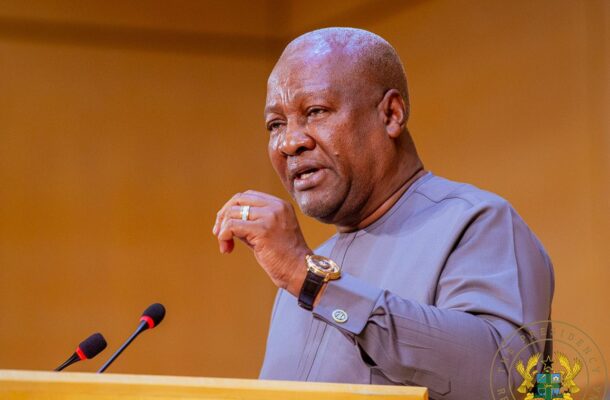
President John Dramani Mahama has introduced a major international health reform initiative aimed at helping African and other developing nations reduce dependence on foreign-controlled healthcare systems and donor-driven policies.
Addressing delegates at the 79th World Health Assembly on Monday, May 18, the President argued that countries in the Global South must be given greater control over healthcare financing, pharmaceutical production, and health data management to build stronger and more sustainable systems.
He criticised the current global health structure, saying many developing countries are overwhelmed by donor-related administrative requirements that divert attention from improving healthcare delivery.
According to him, health officials in poorer nations often spend more time satisfying reporting obligations than focusing on local medical needs and primary healthcare services.
President Mahama also questioned the effectiveness of the expanding number of international health organisations, stressing that an increase in institutions does not automatically result in better healthcare outcomes for vulnerable populations.
As part of efforts to drive change, he unveiled a new reform platform known as the “Accra Reset,” which will be supported by a Presidential Council made up of leaders from countries in the Global South.
The initiative will focus on three main areas. The first involves a High-Level Panel on Reform composed of independent global experts who will examine weaknesses within the current international health governance system and recommend practical reforms.
The second component, called the Reform Interlocking Observatory, is designed to improve coordination among major global health institutions such as World Health Organization, Gavi, the Vaccine Alliance, and The Global Fund to reduce policy overlaps and conflicts affecting developing countries.
The final pillar, known as the Health Investment National Gateway (HINGE), will focus on turning policy commitments into real investments by supporting local drug manufacturing, biotechnology innovation, and broader healthcare infrastructure development across participating countries.
President Mahama said the broader objective is to help African nations build resilient health systems that are less dependent on external support and better positioned to respond to future health crises independently.






Popular News
No trending posts found.