Open Weija Children’s Hospital now – World Bank tells Gov’t
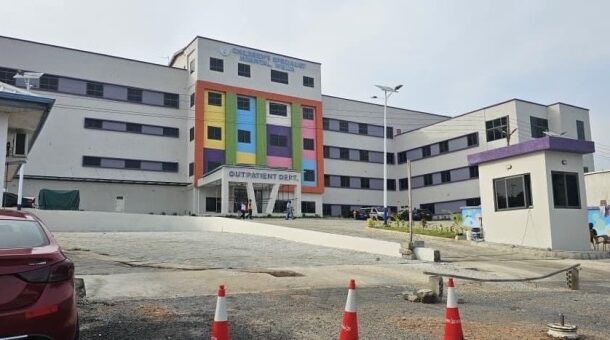
The World Bank has mounted pressure on the Government of Ghana to urgently operationalise and open the Weija Paediatric Hospital, warning that the multi-million-dollar facility was specifically constructed to strengthen healthcare delivery for children but remains unused months after completion.
The Bank disclosed that the 120-bed specialised children’s hospital at Weija was constructed and equipped under the World Bank-funded COVID-19 Emergency Preparedness and Response Project at a total cost of US$10.15 million.
In a statement on the status of the facility, the World Bank said it remained “strongly desirous” of seeing the hospital opened to the public as quickly as possible so that Ghanaians could begin benefiting from the investment.
The project, which formed part of Ghana’s emergency health infrastructure expansion during and after the COVID-19 pandemic, was expected to boost specialised paediatric healthcare services and reduce pressure on overcrowded referral hospitals, particularly within the Greater Accra Region.
However, despite the completion of major infrastructure works, the hospital has still not been opened for public use, raising concerns among health stakeholders and sections of the public over delays in operationalising the facility.
According to the World Bank, the project officially closed on December 16, 2025, after government secured a six-month extension to allow the completion of key outstanding activities.
The Bank explained that the extension became necessary because government had not released some International Development Association (IDA) spending needed to complete critical components of the project.
Even after the extension period, several aspects of the project reportedly remained unfinished, including the installation of some medical equipment and the implementation of environmental and social safety measures required under the World Bank’s Environmental and Social Framework for healthcare facilities.
“The Government constructed and equipped the 120-bed hospital under the World Bank COVID-19 Emergency Preparedness and Response Project (P173788) at a cost of US$10.15 million,” the Bank stated.
It added that while undisbursed IDA funds under the project could still be used to settle eligible outstanding obligations until June 16, 2026, responsibility for completing all remaining safeguard requirements now rests solely with the Government of Ghana.
The Bank stressed that government must now provide its own resources to complete all outstanding environmental and social obligations as well as settle expenditures deemed ineligible for IDA financing.
“Government is responsible for providing its own resources to complete the outstanding environmental and social safeguard obligations under the project and to settle any obligations it has incurred for expenditures ineligible for IDA financing,” the statement said.
The delayed opening of the Weija Paediatric Hospital has attracted growing public attention in recent months, with many health sector observers warning that continued delays could undermine efforts to improve specialised child healthcare services in the country.
Beyond infrastructure and equipment installation, the World Bank also noted that the hospital cannot become fully operational until government deploys the necessary medical personnel, administrators and support staff to the facility.
“To fully operationalise the hospital, the Government will need to complete these necessary actions and assign staff to the facility,” the Bank added.
The World Bank further reaffirmed its continued engagement with Ghanaian authorities to ensure the facility is opened without further delays.
The Bank also used the opportunity to explain procurement compliance requirements under World Bank-funded projects, stressing that all borrowing countries are expected to strictly adhere to procurement regulations aimed at ensuring transparency, accountability and value for money.
According to the statement, where procurement reviews reveal breaches of established procedures, the Bank reserves the right to declare affected contracts ineligible for IDA financing.
“Under IDA loan agreements Borrowers must follow the World Bank’s Procurement Regulations aimed at ensuring transparency and value for money. Where a post procurement review finds that the Regulations have not been followed, the World Bank exercises remedies,” the statement noted.






Popular News
No trending posts found.