
What to expect as Parliament re-eopens: Analysis of welcome remarks by leadership
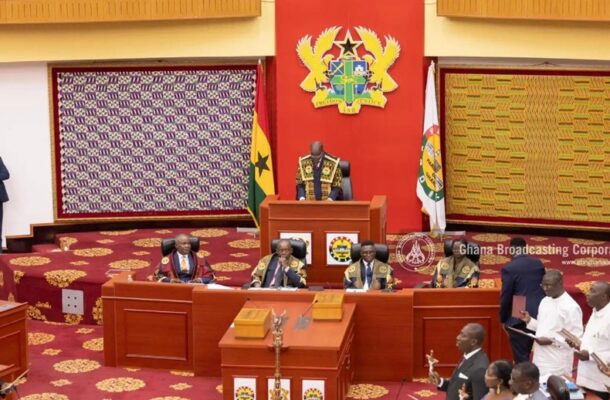
The 2nd meeting of the 2nd session of the 9th Parliament opened with three distinct messages. Speaker Alban Bagbin demanded discipline. Majority Leader Mahama Ayariga laid out a committee-driven legislative agenda. Minority Leader Alexander Afenyo-Markin asked for space to speak.
Taken together, the opening day set the tone for a session where the Majority has the numbers to legislate, but the Minority has the microphone to shape the political narrative.
Bagbin Draws the Line on Privilege and Conduct
Speaker Alban Bagbin used his opening remarks to remind MPs that parliamentary privilege is not a shield against the law.
“Not even the Ghanaians that we represent are above the law. So we the representatives are therefore not above the law. No privilege or immunity supersedes the law,” he said.
The statement matters because it redefines the rules of engagement between Parliament and security agencies. Bagbin clarified that police and other agencies do not need his permission to arrest MPs, only to inform him so he can apply the law on privilege. The effect: fewer procedural delays if arrests occur, and less room for the House to use privilege as a political tool.
Bagbin also signaled a low tolerance for absenteeism and disorder. He urged members to be punctual and focus on the workload, warning that conduct which erodes public confidence will be dealt with.
On legislation, he listed four bills with cross-party support for speedy processing: the Constitution Amendment Bill 2025, Human Sexual Rights and Family Values Bill, Property Rights of Spouses Bill, and Parliamentary Transition Bill. By highlighting these early, he is pushing committees to prioritize consensus items and avoid getting bogged down in partisan fights.
The session will also have a foreign policy footprint. Bagbin announced a briefing from the Minister of Foreign Affairs on the situation in South Africa and confirmed that Parliament will host the African Family Values and Sovereignty Conference from June 3-5.
Ayariga Shifts the House to Committee Mode
Majority Leader Mahama Ayariga framed the session around oversight and economic legislation.
“In this Second Meeting and First Session of the Nineth Parliament of Ghana, we will focus on Parliament’s Committees’ work and pay attention to their oversight responsibility over state institutions to fulfil their mandates,” he said.
The shift is deliberate. With 183 seats plus four independents, the NDC Majority can pass business without the Minority. Ayariga’s strategy is to use committees to generate accountability pressure on state institutions, requiring regular reports and public appearances. The goal is to create a record of oversight that the Majority can point to ahead of 2028.
On the legislative front, Ayariga announced amendments to the Ghana Cocoa Board Act, Ghana Investment Promotion Authority Bill, Ghana Deposit Protection (Amendment) Bill, and changes to exemptions and income tax. He described them as confidence-building measures for the financial system and tax regime.
His appeal to MPs was for debate without obstruction. “Differences of opinion enrich our democracy, but division must never obstruct national progress,” he said. The line works both ways: it calls for responsibility, but also signals that obstruction will be portrayed as anti-national.
Afenyo-Markin Pushes Back on Space and Process
Minority Leader Alexander Afenyo-Markin entered the session with a procedural complaint.
“We hold the view that in this meeting, the Majority should be more accommodating; they must hear us. They must allow the Minority to do more advocacy. We expect the Speaker to admit more and more of our motions,” he said.
The complaint reflects a structural reality: with 88 seats, the NPP Minority cannot block legislation. Their leverage lies in using motions, statements, and debates to force issues into public view. Afenyo-Markin’s demand is for the Speaker to admit more opposition motions, turning the chamber into a platform for accountability and alternative messaging.
He also kept pressure on the executive and judiciary by reiterating criticism of the arrest and remand of NPP Bono Regional Chairman Abronye DC, calling it state-sponsored political persecution. The case has become a touchpoint for the Minority’s broader argument that free speech and judicial independence are under threat.
The approach is consistent with the Minority’s “government-in-waiting” posture outlined by former Vice President Bawumia days earlier: speak with facts, maintain discipline, and remind Ghanaians that the NPP has not disappeared.
What to Watch in the Weeks Ahead
The session will likely produce three overlapping dynamics:
1. Legislative throughput will be high. With consensus bills identified and a Majority that can command numbers, expect the Constitution Amendment Bill, Property Rights of Spouses Bill, and tax amendments to move quickly through committees.
2. Committee hearings will become political events. Ayariga’s focus on oversight means CEOs and agency heads will face public questioning. These sessions will generate headlines and give the Majority material for accountability messaging.
3. Procedural fights will punctuate the calm. If the Majority limits Minority motions, expect Afenyo-Markin to use points of order, walkouts, and media engagements to keep the opposition visible. The Abronye DC case and broader rule-of-law issues will be the vehicle.
Speaker Bagbin’s insistence on discipline gives him room to referee these clashes. How he balances the demand for order with the Minority’s demand for space will determine whether the session is remembered for legislation passed or for political friction.
For now, the markers are set. The Majority wants to legislate and show oversight. The Minority wants to speak and be heard. The Speaker wants both to happen without eroding the institution’s credibility.











Comments (0)