11 Years On, June 3 Victims Still Await Justice — OneGhana Movement
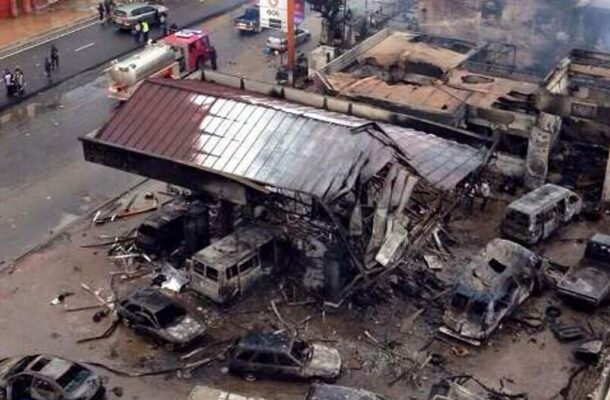
Eleven years have passed since fire, flood and fuel combined to turn an ordinary evening in Accra into one of the darkest nights in Ghana’s history.
For the survivors and families of those who perished on June 3, 2015, the grief has never fully lifted — and neither has the silence from those they hold responsible.
At a commemorative event marking the 11th anniversary of the disaster on June 3, 2026, the OneGhana Movement renewed its call for accountability, declaring that justice for the victims of that tragedy remains painfully elusive more than a decade on.
The movement recalled that over 150 people lost their lives and more than 200 others were injured when a catastrophic combination of flooding, fire and fuel devastated parts of Accra that night.
Many of those who survived have never truly recovered — some robbed of their hearing, others of their livelihoods, and others still of entire families.
In 2018, 69 victims took the matter to court, filing a class action lawsuit against GOIL, the National Petroleum Authority, the Accra Metropolitan Assembly and the station manager, demanding accountability and compensation. That legal battle, now eight years old, continues to drag on.
Yet the OneGhana Movement insists that what has emerged from the courtroom proceedings is damning. A witness representing GOIL reportedly conceded under cross-examination that the tragedy could have been prevented.
A witness for the NPA similarly acknowledged that more robust regulatory oversight might have averted the disaster entirely.
The movement also took aim at the Accra Metropolitan Assembly, accusing it of inconsistency in its participation in the court process despite bearing direct responsibility for enforcing planning and safety regulations.
“These are not opinions. These are facts on the record,” the group stated firmly.
The movement directed its appeal squarely at the highest levels of government, urging President John Dramani Mahama and the state to ensure that the Resetting Ghana Agenda does not bypass the very citizens it claims to serve — people who have spent over a decade waiting for the state to acknowledge its duty toward them.
The OneGhana Movement paid tribute to survivors who have refused to abandon the fight, singling out Alex Mensah, Kassim Suraj, Francis Appiah and Silas Oduro for their resilience and commitment to pursuing justice through legitimate means.
It also commended lawyer Samson Lardy Anyenini and his colleagues at A-Partners @ Law, alongside Darko, Keli-Delataa and Co., for eight years of pro bono legal representation that has kept the case alive.
The media, too, was called upon to remain vigilant — to ensure that the passage of time does not allow the nation to quietly move on from a tragedy that still has no satisfactory conclusion.
Framing the anniversary as a moment that demands more than remembrance, the movement called for what it described as a “reset of justice, accountability and the State’s duty to protect its people,” insisting that June 3 should finally prompt action rather than another solemn occasion without consequence.
Its closing question was as pointed as it was simple: June 3 — Where Is Justice?





Popular News
No trending posts found.