IMCC urges media to support Ghana’s new decentralisation agenda

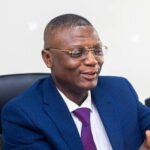
The Executive Secretary of the Inter-Ministerial Coordinating Committee (IMCC) on Decentralisation, Dr Dominic Hoedoafia, has appealed to the media to take a more active role in supporting Ghana’s decentralisation process as the country develops a new National Decentralisation Policy and Strategic Framework for 2026–2030.
Speaking at a Sensitisation and Policy Orientation Workshop for journalists on May 19, 2026, Dr Hoedoafia described the engagement as timely, noting that stakeholders are currently shaping a new policy direction to guide the next phase of decentralisation reforms.
He explained that the 2026–2030 framework is intended to strengthen democratic decentralisation, improve accountability in governance, and promote equitable local development across the country.
According to him, the policy is designed to build an inclusive and transformed local government system that empowers communities while ensuring responsible and fair governance.
Dr Hoedoafia stressed that decentralisation is grounded in the principle of bringing governance closer to citizens, which requires strong, efficient, participatory, and accountable institutions capable of translating policies into real development outcomes.
He also underscored the importance of accountability, describing it as both a constitutional and moral obligation. He highlighted the concept of “diagonal accountability,” where the media and civil society serve as key oversight actors.
“The media occupies a very strategic position in our governance ecosystem. It is the essential bridge between government and citizens, reinforcing accountability and enabling informed public dialogue,” he said.
He further noted that successful decentralisation depends on public understanding and ownership of the process, making civic education, engagement, and communication central to the reform agenda.
Dr Hoedoafia therefore urged media practitioners to increase public awareness of the roles of Metropolitan, Municipal and District Assemblies (MMDAs), local participation structures, fiscal decentralisation processes, development planning, and citizens’ responsibilities in local governance.
He encouraged journalists to pay greater attention to district-level governance issues, arguing that many service delivery challenges are handled at the local level rather than by central government.
He added that matters such as sanitation, housing, and community development should often be directed to Metropolitan, Municipal and District Chief Executives (MMDCEs) instead of national-level officials.
At the same workshop, Prof Kwamena Ahwoi, Chairman of the IMCC Technical Committee, presented a historical overview of Ghana’s governance structure, tracing its evolution from five regions at independence in 1957 to the current sixteen regions.
He explained that these changes form part of ongoing efforts to deepen governance and bring administration closer to citizens.










Comments (0)