
No more IMF bailouts needed in foreseeable future — Ato Forson
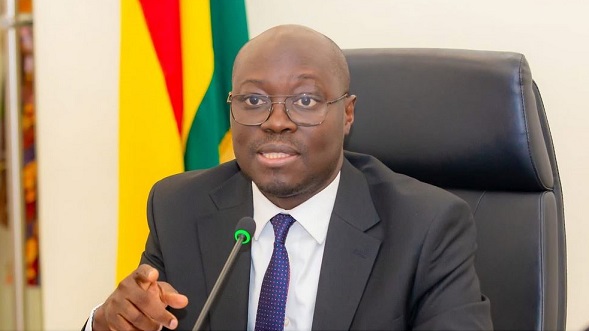
Finance Minister Cassiel Ato Forson has declared that Ghana will not require another financial bailout from the International Monetary Fund (IMF) in the foreseeable future, citing what he described as a remarkable economic recovery driven by fiscal discipline, structural reforms and prudent economic management.
Addressing Parliament on Thursday, May 28, 2026, Dr Forson said the government inherited an economy facing significant challenges but moved swiftly upon taking office to restore stability and place the IMF-supported programme back on track.
According to him, the administration of President John Dramani Mahama undertook a comprehensive reset of the economy by recalibrating the IMF programme to ensure fairer burden-sharing and deeper structural reforms.
“Upon assuming office, President Mahama’s administration moved with clarity and purpose to reset the Ghanaian economy,” Dr Forson told lawmakers.
He outlined a range of reforms implemented over the past year, including the introduction of Public Financial Management (PFM) commitment authorisation controls to strengthen expenditure discipline, an audit of government arrears to eliminate irregular payment claims, and amendments to the PFM Act to establish a 1.5 percent primary surplus target and a 45 percent debt-to-GDP ceiling by 2034.
The Finance Minister also highlighted the operationalisation of the Sinking Fund with dedicated cedi and dollar buffers to support future debt repayments, the establishment of the Office of Value for Money to improve public spending efficiency, and the creation of an Independent Fiscal Council to monitor compliance with fiscal rules.
He further pointed to the establishment of GOLDBOD to support foreign exchange stability and reserve accumulation, as well as the removal of several taxes, including the E-Levy, Betting Tax, Emissions Levy and VAT on motor insurance.
According to Dr Forson, government also pursued expenditure rationalisation measures by reducing the number of ministers to 60 and cutting ministries from 30 to 23.
In the energy sector, he said the government successfully renegotiated agreements with Independent Power Producers, generating savings of more than US$250 million while clearing over US$1 billion in legacy arrears.
The Minister stated that the reforms have produced significant economic gains. He disclosed that Ghana’s real GDP growth reached 6.0 percent in 2025, the highest post-pandemic growth rate, while non-oil GDP growth rose to 7.6 percent, the strongest performance in 14 years.
He further revealed that Ghana’s economy surpassed the US$100 billion mark for the first time in 2025, making it the eighth-largest economy in Africa. Per capita income also increased to US$3,385.
On fiscal performance, Dr Forson reported that the country recorded a primary surplus of 2.5 percent of GDP in 2025, while the public debt-to-GDP ratio declined from 61.8 percent in 2024 to 44.7 percent by the end of 2025.
He noted that Ghana achieved its 45 percent debt-to-GDP target well ahead of both the IMF programme schedule and the statutory target date of 2034 under the amended PFM Act.
Debt sustainability indicators have also improved significantly, with debt service-to-domestic revenue falling from 55.7 percent in 2022 to 28.8 percent in 2025 despite the resumption of full Eurobond debt obligations.
Dr Forson added that Ghana’s debt distress classification has improved from high risk to moderate risk under the Debt Sustainability Analysis framework.
The Minister also highlighted major gains in inflation and interest rates. Inflation declined from 23.8 percent in December 2024 to 3.4 percent in April 2026, while the 91-day Treasury bill rate dropped from 28.4 percent in January 2025 to 4.8 percent in April 2026.
Similarly, the monetary policy rate was reduced from 27 percent to 14 percent over the same period.
On the external front, he said Ghana recorded a current account surplus of 8.3 percent of GDP in 2025, while the cedi appreciated by 40.7 percent against the US dollar.
“These results affirm a simple but enduring truth: fiscal prudence and discipline always deliver results,” he said.
Dr Forson stressed that macroeconomic stability remains critical to job creation, investment growth and long-term prosperity.
Referencing remarks made earlier by President Mahama at the 77th Annual New Year School, the Finance Minister reiterated the government’s commitment to ending Ghana’s reliance on IMF bailouts.
He subsequently delivered what he described as the government’s clearest position on future IMF support.
“Consequently, no further IMF financial bailout will be required in the foreseeable future,” he declared.
Repeating the statement for emphasis, Dr Forson said Ghana had reached a stage where it could sustain its economic progress without returning to the Fund for financial rescue.
He concluded by stating that Ghana’s relationship with the IMF had evolved significantly.
“We have evolved from a position of supplicant to one of partner,” he told Parliament, drawing applause from members of the Majority caucus.











Comments (0)