
Government rules out borrowing for Accra–Kumasi Expressway project
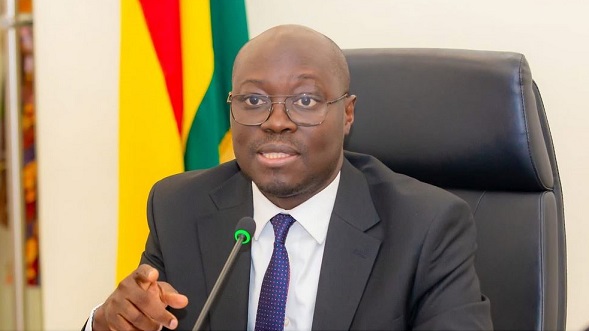
The Government of Ghana has announced plans to finance the Accra–Kumasi Expressway without resorting to borrowing, under a new strategy aimed at directing petroleum revenues into priority infrastructure development.
Finance Minister Cassiel Ato Forson made the disclosure on Thursday, May 28, while speaking at the Ishmael Yamson & Associates Business Roundtable.
He said the estimated $4 billion expressway project would be delivered through carefully structured domestic revenue mobilisation, particularly from oil and mineral resources, rather than external loans.
“Granted, the Accra-Kumasi Expressway is going to cost us $4 billion. We’ll fund it without borrowing. 2025, 2026, 2027, we’ll be able to have $4 billion to link Accra to Kumasi,” Dr. Forson stated.
According to him, government has reviewed the management of petroleum revenues, which in the past were distributed across multiple expenditure items, reducing their developmental impact.
He explained that the revised approach now channels oil revenues directly into infrastructure projects to ensure more visible national development outcomes.
“We’ve said that Ghana’s oil revenue should be used only for infrastructure. It is the responsibility of government to earmark it for major projects over a period,” he noted.
Dr. Forson further disclosed that Ghana generated about $500 million in oil revenue in 2025, alongside an additional $500 million from mineral royalties, supported by higher gold prices.
He said mineral royalties, which were previously invested through the Minerals Income Investment Fund in treasury instruments, have now been redirected to support infrastructure financing.
According to him, the combined $1 billion is currently being committed to the Accra–Kumasi Expressway, with projections indicating an additional $1.5 billion could be generated in petroleum and mineral revenues in 2025 and 2026.
This, he said, would bring total available funding for the project to about $2.5 billion within the period.
Dr. Forson also criticised past utilisation of petroleum revenues, arguing that they were previously spent on recurrent items such as travel and conferences instead of long-term investments.
“All of that, we’ve stopped. We are now focusing on major infrastructure. After 2027, we will target another project to continue national development,” he added.












Comments (0)