
COCOBOD adopts tranche-based financing strategy to cut borrowing costs
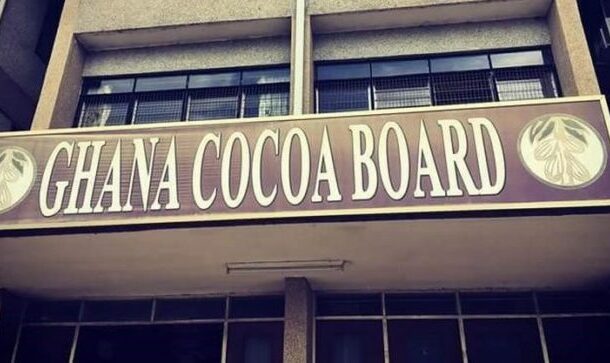
The Ghana Cocoa Board (COCOBOD) is advancing plans to introduce a tranche-based commercial paper programme ahead of the 2026/2027 cocoa season as part of efforts to lower financing costs, expand domestic participation in cocoa financing and reduce reliance on offshore borrowing.
The proposed financing structure will enable COCOBOD to raise funds progressively throughout the crop season instead of securing its entire financing requirement upfront. Officials believe the approach will improve liquidity management, enhance operational flexibility and significantly reduce interest expenses.
Speaking on the sidelines of the Ghana–UK Investment Summit in London, COCOBOD’s Deputy Chief Executive for Finance and Administration, Ato Boateng, said preparations for the programme are at an advanced stage.
“We have made significant progress and engaged all necessary advisors to support the issuance process. The advisors are working diligently to finalise the financing structure, which is now at an advanced stage, while addressing all regulatory requirements and concerns raised by the relevant authorities,” he said.
The commercial paper programme is expected to mobilise working capital from pension funds, commercial banks, international cocoa buyers and other stakeholders within the cocoa value chain. Authorities are targeting the launch of the facility before the start of the next cocoa season.
The initiative forms part of broader efforts to transition away from the offshore syndicated loan arrangement that has financed cocoa purchases for more than three decades.
Under the traditional model, COCOBOD secured annual pre-export financing facilities from international lenders, usually ranging between US$1 billion and US$1.5 billion and backed by future cocoa export revenues.
However, the model has come under pressure in recent years due to Ghana’s debt challenges, rising global interest rates and concerns about COCOBOD’s financial health. The size of the syndicated facility declined to about US$800 million during the 2023/2024 season, while borrowing costs rose considerably.
According to Mr Boateng, pension funds are expected to become a major source of funding under the new arrangement, while commercial banks will also play a significant role.
He noted that COCOBOD is exploring partnerships with Development Finance Institutions (DFIs) to strengthen the lending capacity of participating banks and encourage greater involvement from the domestic financial sector.
“We need to be innovative in our approach because we also want commercial banks to play an active role. To achieve this, we are exploring opportunities to bring Development Finance Institutions on board to enhance the lending capacity of participating banks,” he said.
A central feature of the programme is its tranche-based drawdown mechanism, which allows COCOBOD to access funds only when required for cocoa purchases.
Under the proposed structure, funds will be drawn in phases and repaid as export proceeds are received, reducing the cost of carrying idle capital and improving the efficiency of financing operations.
“The objective is to structure the financing in tranches, enabling us to draw down only the funds required for cocoa purchases at any given time. Once those funds are no longer needed we can repay investors promptly, ensuring prudent use of resources and minimising financing costs,” Mr Boateng explained.
The proposed issuance, estimated at approximately US$1 billion equivalent in cedi-denominated instruments, is expected to serve as a significant test of investor confidence in Ghana’s domestic debt market following the 2022/2023 Domestic Debt Exchange Programme (DDEP).
Market analysts believe the programme could contribute to the development of local capital markets while reducing exposure to foreign exchange risks associated with dollar-denominated borrowing. The revolving structure will allow funds to be raised, deployed and repaid within a single cocoa season using export revenues.
The financing reforms come at a time when COCOBOD continues to face significant operational and financial challenges.
The institution is estimated to have liabilities of about GH¢32 billion, with approximately GH¢11.9 billion due for repayment in 2025. In addition, Licensed Buying Companies are reportedly owed around GH¢10.1 billion, creating liquidity pressures throughout the cocoa supply chain.
The cocoa sector has also experienced production setbacks in recent years. National output declined from about 1.04 million metric tonnes in the 2020/2021 season to roughly 531,000 tonnes in 2023/2024 before recovering modestly to an estimated 700,000 tonnes in the 2024/2025 season.
Global market developments present further challenges. Cocoa prices have eased from record highs reached during recent supply shortages amid concerns over weakening chocolate demand and increasing cocoa inventories on international exchanges. Lower prices could reduce export earnings available to support sector financing.
Nevertheless, supply-side risks remain significant. Forecasts pointing to a high likelihood of El Niño conditions have raised concerns about potential weather-related disruptions across West Africa, while preliminary assessments of the 2026/2027 crop suggest below-average development of cocoa trees.
As COCOBOD prepares to roll out the commercial paper programme, industry stakeholders will be watching closely to see whether the new financing model can provide a sustainable alternative to offshore borrowing while supporting the long-term recovery and growth of Ghana’s cocoa sector.












Comments (0)