
Gun ownership is a privilege, not a right, says Interior Deputy Minister
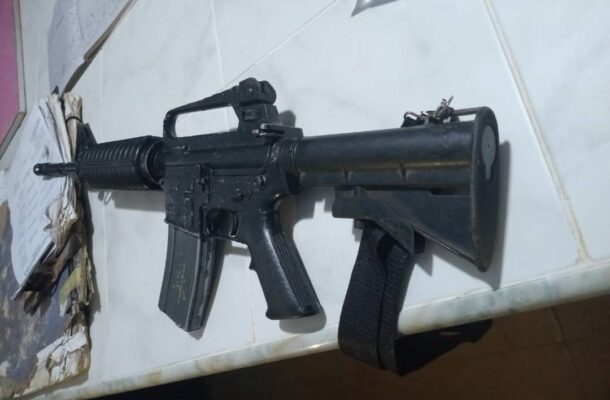
Ghana’s government has made clear that the ability to possess a firearm remains a conditional privilege subject to revocation — not an inalienable right — as authorities tighten their grip on weapons licensing in pursuit of a safer society.
Deputy Minister for the Interior Ebenezer Okletey Terlabi articulated this position during an appearance on Adom FM’s Dwaso Nsem programme, emphasising that the state reserves the prerogative to confiscate firearms whenever circumstances suggest they pose a threat to public wellbeing.
“Having a gun is not a right but a privilege. So we can take it any time, especially when we realise it can cause trouble,” Terlabi stated.
The underlying philosophy guiding the government’s regulatory approach rests on a foundation of rigorous vetting.
Before any citizen receives authorisation to carry a weapon, they must navigate multiple hurdles — comprehensive assessment of their suitability, formal training in safe handling, and psychological screening designed to identify individuals whose mental state or temperament might render them dangerous with a firearm in hand.
“Before we give you the gun, we must know and assess whether you can use it. You will be trained. We must make sure you don’t have any psychological problem that will cause you to misuse the firearm. Else we will not give it to you,” the Deputy Minister explained.
For those who perceive genuine threats to their safety, Terlabi advocated a different pathway: the protective services of law enforcement rather than self-arming.
The state, through its interior apparatus, bears the fundamental responsibility for citizen security and can marshal resources to address documented threats.
“If you know robbers will disturb you, report to the police and you will be given protection. It is the responsibility of government through the Ministry of Interior to ensure the safety of citizens,” he noted.
The consequences of permitting unsuitable individuals to retain firearms, Terlabi warned, extend far beyond personal tragedy.
A gun in the hands of someone untrained or mentally unfit becomes a weapon capable of claiming multiple lives in moments.
“So if someone has a gun and doesn’t know how to handle it or has a mental problem, he or she can shoot many people. So taking this privilege in the name of the safety of everyone is paramount,” he added.
The amnesty initiative launched by government has already borne fruit. Approximately 4,000 weapons have been surrendered voluntarily by citizens seeking to comply with regulations or shed themselves of unwanted arms. Of these, 2,000 will be destroyed as part of a purge of unnecessary firepower.
The remaining 4,000 will undergo verification procedures — background investigation, training assessment and formal registration — to determine which can be retained under new regulations and which must be confiscated.
Those found unfit to possess firearms will have their weapons incinerated, a process Terlabi characterised as essential to public safety.
“If we detect that you are not fit to use it, we will burn it,” he said.
The Deputy Minister concluded by reframing the entire conversation around weapons ownership. Firearms, he insisted, must not become casual commodities — everyday items like the groundnuts sold in street markets that anyone can acquire without scrutiny. The law exists precisely to prevent such normalisation.
“Firearms shouldn’t be like groundnut everyone buys from the market. The law doesn’t permit that.”
His remarks underscore the government’s determination to shrink the universe of legal gun owners to a smaller, more carefully vetted cohort — a strategy meant to reduce both street violence and domestic tragedies while preserving security for those deemed genuinely eligible to possess such dangerous instruments.






Popular News
No trending posts found.