
Final Exodus Takes Flight July 25 as Ghana Closes Book on South Africa Evacuation
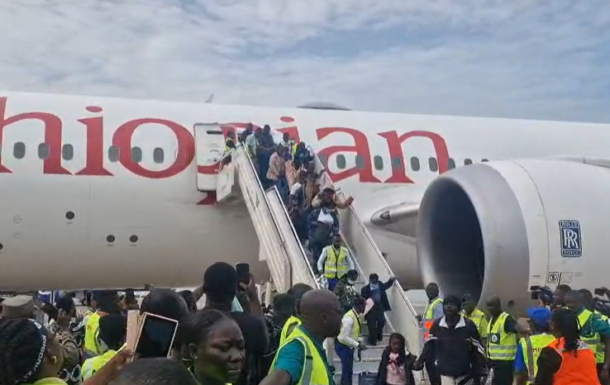
Ghana’s diplomatic apparatus in South Africa has established a terminal evacuation timeline, designating July 25 as the commencement date for the concluding repatriation phase that will transport the remaining contingent of approximately 900 Ghanaians from territories ravaged by recent xenophobic mobilisation back toward their nation of origin.
High Commissioner Benjamin Quashie addressed assembled members of the Ghanaian diaspora on Tuesday, July 14, disclosing that the final operation represents the culmination of a multi-phase evacuation undertaking that has progressively extracted Ghanaian nationals from circumstances threatening their safety and institutional wellbeing.
The exercise functions as institutional closure mechanism — upon completion of this ultimate repatriation cohort, governmental evacuation responsibility terminates and subsequent repatriation requests will be processed through routine consular channels rather than through emergency mass mobilisation procedures.
The evacuation programme has accumulated substantial operational achievement. Previous phases have successfully transported approximately 926 Ghanaians toward home, a figure documenting the scale of persons whose residence in South Africa became untenable following the xenophobic violence.
The remaining 900 registered individuals constitute the final quantifiable cohort eligible for evacuation through the formal programme.
Quashie articulated the operational mechanics governing the ultimate repatriation.
The exercise will unfold through staged implementation with scheduled flights departing daily until the entire registered beneficiary population has transited South African territory.
The temporal distribution of repatriation across multiple flight operations reflects logistical necessity and the magnitude of persons requiring simultaneous transportation.
Eligibility parameters remained rigidly demarcated. Only individuals who completed the registration and screening procedures previously established would be accommodated within the final operation.
No supplementary registrations would be accepted; no additions to the verified beneficiary lists would occur. The completion of earlier registration phases established the institutional boundary beyond which no new applicants would be incorporated.
“We are going to do the final repatriation of close to 900 Ghanaians who have voluntarily given their names here in South Africa that they want to go,” Quashie stated.
The High Commissioner extended explicit advisory toward unregistered Ghanaians inhabiting South African territory. Their appearance at the High Commission office seeking inclusion in the evacuation exercise would prove futile; institutional procedures would not accommodate persons absent from verified registration documentation.
The evacuation programme’s terminal character meant that this opportunity represented the final institutional mechanism through which mass repatriation would be executed.
Quashie simultaneously counselled evacuation beneficiaries regarding logistical compliance. Individuals should remain proximate to their current provincial residences pending official notification of their specific departure scheduling.
The coordination of nearly 900 persons across multiple flight operations and geographic dispersal demanded that beneficiaries maintain locational stability to facilitate efficient assembly and transportation toward departure facilities.
The evacuation programme’s conclusion signals that Ghana’s institutional response to the xenophobic crisis has achieved its terminal operational phase.
The government mobilised through presidential and ministerial apparatus to extract Ghanaians from danger. That mobilisation will now terminate, returning repatriation requests to the conventional diplomatic channels through which consular services ordinarily process citizen assistance.
Yet the repatriation phenomenon extends beyond mere logistical accomplishment toward the broader reality of Ghanaian diaspora vulnerability within southern African labour markets.
Xenophobic violence targeting foreign nationals had transformed what were perceived as economic opportunity zones into territories of existential threat — a reversal of institutional expectation that prompted the unprecedented evacuation mobilisation.
Upon completion of the final 900-person repatriation, the mass evacuation programme enters institutional history.
Future Ghanaians confronting emergency circumstances in South Africa will access assistance through regular consular procedures rather than through the extraordinary governmental mobilisation that characterized the xenophobic crisis response.






Popular News
No trending posts found.