
Paul Afoko Stakes Chairman Claim on Foundation of Reconciliation
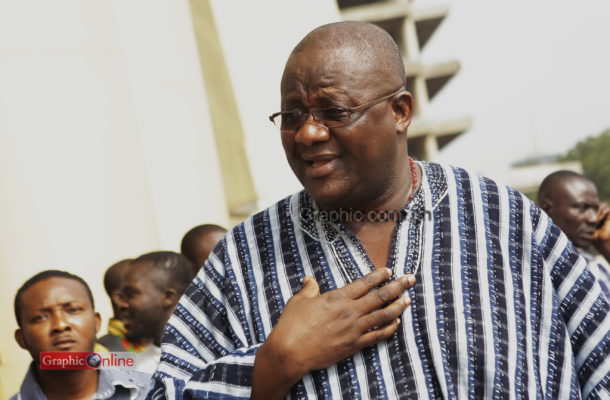
A veteran New Patriotic Party operative has announced his pursuit of the organisation’s top administrative position by pivoting away from conventional leadership rhetoric toward institutional diagnosis that positions internal fracturing as the fundamental barrier preventing the party from recapturing electoral dominance.
Paul Afoko unveiled his National Chairmanship candidacy on Tuesday, July 14, 2026, framing his bid not as personal ambition advancing particular factional interest but as institutional commitment toward reconstructing the cohesion that electoral success demands.
The party’s defeat in the 2024 general election, in his diagnosis, emanates fundamentally from internal divisions that have alienated loyal constituencies and transformed intra-party competition into institutional cannibalism.
“The NPP cannot win when it is divided. We cannot win when old wounds remain open,” Afoko declared, his formulation establishing that electoral recovery begins with institutional reconciliation rather than with policy formulation or campaign strategy refinement.
The former National Chairman positioned himself as bridge architect rather than faction commander.
His ambition extends not toward leading one segment of the party against competing constituencies but toward the construction of institutional pathways permitting formerly antagonistic elements to coexist within unified organisational framework.
“I’m not coming to lead one faction against another. I’m coming to help reconcile the party. I’m coming to build bridges across generations, across regions, across tendencies, across camps, and amongst all genuine party people who believe in our tradition,” Afoko articulated.
His diagnosis encompassed the psychological dimensions of party fragmentation. Members experiencing institutional exclusion, humiliation, or marginalisation predictably withdraw their enthusiasm and commitment; the party cannot generate electoral victory when its organisational foundation rests upon widespread sentiment of alienation and abandonment.
Internal competition, when permitted to devolve into destructive conflict, corrodes institutional effectiveness regardless of policy sophistication or campaign resource allocation.
Afoko invoked what he characterised as the party’s foundational institutional values — respect, discipline, tolerance, service and loyalty to institutional objectives transcending individual ambition. The restoration of these principles constitutes, in his assessment, a prerequisite for organisational renewal and electoral resurrection.
“We must bring back the abiding principles of our tradition, which are respect, discipline, tolerance, service, and loyalty to a cause bigger than any one individual,” Afoko stated.
His candidacy announcement arrives as the NPP prepares for internal electoral procedures designed to elect new national executives.
The party’s organisational restructuring following its 2024 defeat requires leadership committed to institutional restoration rather than factional advantage-seeking — a distinction that Afoko positioned as central to his chairmanship rationale.
The emphasis upon reconciliation and unity reflects institutional recognition that the NPP’s political future depends less upon new policy innovation than upon the resolution of internal antagonisms that have progressively corroded member enthusiasm and public confidence in party governance capacity.





Popular News
No trending posts found.