
Ghana entering new era of stability and IMF partnership — Ato Forson

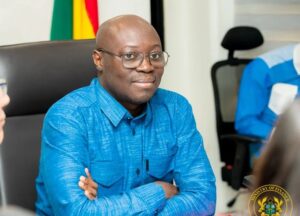
Finance Minister Dr Cassiel Ato Forson has announced what he described as a new phase in Ghana’s engagement with the International Monetary Fund (IMF), stating that the country has achieved significant progress in restoring macroeconomic stability and debt sustainability ahead of schedule.
Addressing Parliament on Thursday, May 28, 2026, Dr Forson said Ghana was moving beyond crisis management and financial dependence toward a more sustainable and reform-oriented partnership with the IMF under President John Dramani Mahama’s Reset Agenda.
“This is a consequential moment in the life of our nation,” the Finance Minister said. “It signifies Ghana’s passage from crisis management to stability, from dependence on financial bailout to partnership in reform, and from uncertainty to renewed confidence in our economic future.”
His remarks represent one of the strongest indications yet from the Mahama administration that the economy is recovering from the severe financial challenges that led Ghana into debt distress and an IMF-supported programme under the previous government.
Recounting the Economic Crisis
Dr Forson used part of his statement to revisit the economic difficulties that emerged in 2022, describing the period as one of profound hardship for the country.
According to him, the previous administration turned to the IMF on July 1, 2022, after fiscal imbalances, debt pressures and balance-of-payments challenges intensified.
He noted that the cedi came under significant pressure, inflation surged sharply, foreign exchange reserves declined and investor confidence weakened, resulting in Ghana losing access to international capital markets.
The Finance Minister also outlined the series of sovereign credit rating downgrades that pushed Ghana deeper into non-investment-grade territory.
He said Moody’s downgraded Ghana to Caa1 in February 2022, while S&P later lowered the country’s rating to CCC+. Fitch Ratings subsequently reduced Ghana’s rating to CCC and later to CC within the same year.
According to Dr Forson, Ghana’s Eurobond spreads widened to about 3,400 basis points in October 2022, effectively shutting the country out of the international bond market.
“That further deepened the economic and financial crisis,” he stated.
Impact on Key Institutions
The Finance Minister said the economic challenges extended beyond government finances and significantly affected major institutions and businesses.
He disclosed that the Ghana Cocoa Board (COCOBOD) was unable to secure its syndicated loan facility for the first time in several years, while some local banks faced difficulties obtaining external credit lines and letters of credit due to declining confidence among international financial institutions.
Dr Forson also revisited the Domestic Debt Exchange Programme (DDEP), introduced in December 2022 after the government announced it could no longer meet its domestic debt obligations.
He noted that the programme imposed losses across several sectors, affecting the Bank of Ghana, commercial banks, pension funds, insurance companies, non-bank financial institutions, individual bondholders and pensioners.
The Finance Minister further recalled that Ghana sought debt treatment under the G20 Common Framework in December 2022 to restructure more than US$5 billion in bilateral debt before subsequently defaulting on portions of its external commercial debt.
Burden on Ordinary Citizens
According to Dr Forson, ordinary Ghanaians bore the greatest burden during the crisis period.
He cited the rapid depreciation of the cedi, inflation exceeding 50 percent, rising interest rates, declining purchasing power, erosion of savings and incomes, and the impact of debt restructuring measures on bondholders as some of the major challenges faced by citizens.
The Minister said the government’s ongoing reforms are aimed at ensuring that such conditions are not repeated and that the gains achieved through economic stabilisation are sustained over the long term.
He maintained that Ghana’s improving fiscal and macroeconomic indicators demonstrate that the country is steadily emerging from one of the most difficult economic periods in its recent history and is now positioned for a more stable and resilient future.



Popular News
No trending posts found.