
Ghana to begin refining tts own crude Oil locally in June — Mahama
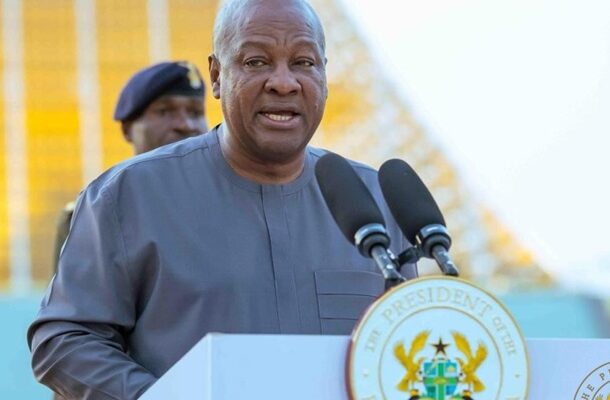
President John Dramani Mahama has announced plans for Ghana to commence the local refining of its own crude oil, describing the move as a major milestone in the country’s industrialisation drive and a crucial step toward creating jobs and adding value to natural resources.
Speaking at the Ghana Diaspora Town Hall Meeting in London on May 31, 2026, President Mahama outlined his administration’s strategy to transform Ghana from a producer and exporter of raw materials into a value-driven industrial economy.
According to the President, Ghana is not only expanding oil and gas production offshore but is also taking deliberate steps to strengthen its capacity to process resources locally.
He disclosed that the government has secured substantial investments in the upstream petroleum sector, including a commitment of approximately US$1.5 billion from ENI for operations in the Offshore Cape Three Points (OCTP) Field to increase crude oil and natural gas production.
Despite the expected boost in output, President Mahama emphasized that increasing production alone is not enough to maximise the country’s economic benefits.
“We are about to make history again. We did it during my first term, but after we left office it did not continue. In June, we will deliver a parcel of Ghanaian crude from our own oil fields to a refinery in Ghana for processing,” he announced.
The President said the initiative would help reduce the country’s reliance on imported refined petroleum products while strengthening the domestic petroleum industry.
He noted that for years Ghana has exported crude oil and then imported refined petroleum products, a practice that has limited the country’s ability to fully benefit from its natural resources.
“Normally we produce the oil and export it. Then we import finished petroleum products or import crude again to refine. That cycle must change,” he said.
President Mahama explained that refining crude oil locally would enable Ghana to retain more foreign exchange, promote industrial growth, strengthen local supply chains, and create employment opportunities across various sectors of the economy.
He added that the initiative forms part of a broader vision to establish a fully integrated petroleum value chain that spans exploration, production, refining, petrochemical development, manufacturing, and exports.
Beyond the petroleum sector, the President called for increased value addition in mining, agriculture, and manufacturing, arguing that Ghana’s long-term economic transformation depends on processing more of its raw materials locally.
“We must pursue value addition not only in oil and gas, but in mining, agriculture, manufacturing and every sector of our economy,” he stated.
The planned delivery of Ghanaian crude oil to a local refinery in June is expected to mark a significant step in the country’s industrialisation efforts, with government hopeful that the initiative will boost economic resilience, create jobs, and support sustainable growth.





Popular News
No trending posts found.