Ghana’s debt crisis rooted in flawed tax system – Seth Terkper
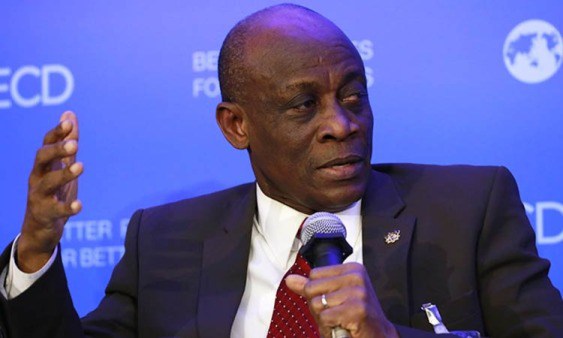
Ghana’s deepening debt crisis is largely the result of structural weaknesses in the country’s tax system, according to Seth Terkper, former Finance Minister and current Special Presidential Advisor on the Economy.
Speaking at the launch of his new book, “VAT in Africa – The Ghanaian Experience”, Mr. Terkper warned that distortions in Ghana’s tax framework have undermined revenue collection, pushing the government into an unsustainable cycle of borrowing to cover expenditure gaps.
“If revenue is distorted, there won’t be enough to fund public spending,” he said. “That shortfall leads to borrowing, and we end up sinking deeper into debt.”
Mr. Terkper underscored the critical link between effective tax policy and long-term fiscal stability. Ghana’s ballooning public debt remains a major economic concern, prompting the government to secure a US$3 billion bailout from the International Monetary Fund (IMF) in 2023, which includes a debt restructuring programme.
Drawing on his experience as Finance Minister from 2013 to 2017, Mr. Terkper identified the proliferation of levies as a key issue weakening the effectiveness of Ghana’s tax regime. He explained that while the Value Added Tax (VAT) was initially introduced to streamline and replace multiple consumption taxes, many of those taxes have re-emerged in the form of new levies—adding complexity and undermining the system.
“When VAT was introduced, it replaced numerous consumption taxes. Unfortunately, many of these taxes have returned under different names, creating a confusing and burdensome system,” he said.
He described this trend as a reversal of the tax simplification efforts achieved during the 2013–2016 reform period. A complicated tax system, Mr. Terkper warned, increases the likelihood of tax avoidance and evasion and places additional pressure on tax administration agencies.
“If you make it too complex, you make it hard for taxpayers to comply—and equally hard for the Ghana Revenue Authority (GRA) to enforce,” he noted.
To address these issues, Mr. Terkper advocated for a return to a simplified tax structure built around two core pillars: income and consumption taxes. This model, he explained, aligns with international best practices widely adopted in advanced economies.
“In many developed countries, there’s less dependence on tariffs. They focus on streamlined income and expenditure taxes. That’s the direction we should be heading,” he said.
While acknowledging that emergencies—such as the COVID-19 pandemic—may justify temporary revenue measures, Mr. Terkper cautioned against allowing such taxes to become permanent. He argued that retaining crisis-era taxes after the crisis ends only increases the tax burden, encouraging non-compliance.
“When the crisis ends, if those temporary taxes aren’t removed, they become a burden. People will look for ways to avoid them,” he warned.
Instead of introducing new taxes during fiscal difficulties, Mr. Terkper recommended relying on stabilisation funds to help manage shocks without distorting the tax system. “That’s precisely why we set up mechanisms like the stabilisation fund—to provide fiscal space in difficult times, so we don’t have to disrupt the core tax structure.”
His remarks come as the government faces increasing pressure to boost revenue mobilisation without further straining businesses and households. The Ghana Revenue Authority has consistently fallen short of its targets, contributing to chronic fiscal deficits.
Mr. Terkper concluded by emphasizing that revenue collection should be improved through more effective tax administration and voluntary compliance, not through additional taxes.
“Tax serves everyone,” he said. “What we need is a fair, simple system that encourages compliance and is backed by strong enforcement—not more taxes.”




Popular News
No trending posts found.