
Government targets diaspora investment for 24-Hour Economy as remittances hit US$7.8 Billion
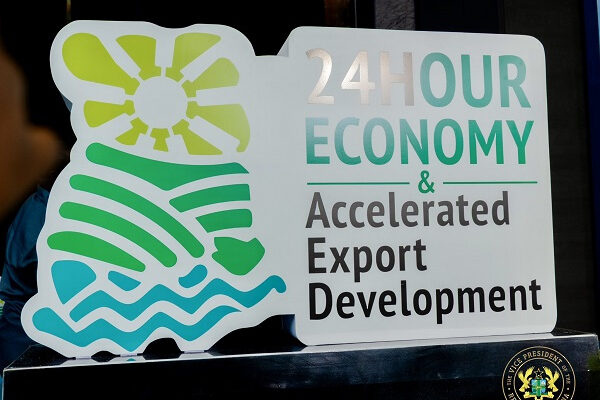
Government has launched a drive to channel a portion of the record US$7.8 billion annual remittance inflows into the 24-Hour Economy and Accelerated Export Development Programme, with Presidential Adviser, Augustus Goosie Tanoh, urging Ghanaians in the United Kingdom to move beyond household transfers and participate directly in financing productive investment and export-led growth.
Addressing a diaspora townhall at the Ghana High Commission in London as President John Dramani Mahama engaged Ghanaian communities in the United Kingdom and Ireland, Tanoh said the country’s improving macroeconomic position, expanding export opportunities and pipeline of strategic projects under the 24-Hour Economy programme had created a stronger basis for diaspora capital mobilisation.
“In 2025, the Ghanaian diaspora sent home a record 7.8 billion dollars in remittances, up from around four billion only six years ago. That flow is now larger than all official development assistance and foreign direct investment combined, and the United Kingdom is our second-largest source after the United States,” Tanoh said.
The appeal was directed at one of Ghana’s most economically significant diaspora communities. Bank of Ghana data show the United Kingdom accounted for 28 percent of total remittance inflows in 2024, making it one of the country’s largest remittance corridors, although its share eased to about 17.5 percent during the first nine months of 2025.
Also, the 2021-22 UK censuses recorded 135,854 Ghana-born residents, while broader community estimates place the Ghanaian population, including British-born descendants, at around 250,000.
Tanoh acknowledged the diaspora’s existing contribution to the economy before inviting members of the community to take a more direct role in financing development and industrial expansion.
“You have, quietly, been holding up our balance of payments and sustaining millions of households, and we honour that. We now want to invite you up a step,” he said.
The administration identified a range of investment channels through which diaspora capital could be deployed, including financing vehicles anchored by the Ghana Infrastructure Investment Fund as well as capital market platforms operated by the Securities and Exchange Commission and the Ghana Stock Exchange.
The appeal formed part of a broader effort to position the 24-Hour Economy and Accelerated Export Development Programme as a vehicle for attracting both domestic and international private capital into productive sectors.
Tanoh argued that the investment proposition is underpinned by a significantly stronger macroeconomic environment. He cited inflation of 3.4 percent, described as the lowest level in more than four years following fifteen consecutive months of decline, alongside a reduction in the Bank of Ghana policy rate from 28 percent to 14 percent.
He also pointed to gross international reserves of US$14.5 billion, representing close to six months of import cover, while public debt has declined from a peak of 92.4 percent of GDP to approximately 48 percent. The economy also expanded by 6 percent in 2025.
The productive transformation government is seeking to finance through the 24-Hour Economy programme is centred on large-scale investments in agriculture, manufacturing, energy and logistics, with a projected 1.7 million jobs expected to be created by 2028.
According to Tanoh, four agreements signed within the past ninety days alone account for more than 160,000 projected jobs. These include a US$1.45 billion solar energy facility at Buipe, a US$300 million oil palm project at Kambonwule, a bioenergy and biofuels programme spanning Buipe and Damanko, and a demarcated air cargo hub at Tamale intended to support export growth.
To strengthen the case for diaspora participation, Mr Tanoh pointed to examples elsewhere on the continent where overseas communities have played a direct role in financing national development.
“Look at what diaspora finance has built elsewhere on this continent. Ethiopia mobilised its diaspora through bonds, through embassies, and through the technical advocacy of its professionals abroad to help finance a five-billion-dollar national project without recourse to external concessional loans,” he said.
The United Kingdom remains a strategic focus of the government’s diaspora engagement strategy given the concentration of Ghanaian professionals, entrepreneurs and investors resident there, making it a critical entry point for the broader 24-Hour Economy capital mobilisation drive.
Tanoh also highlighted progress in export diversification, noting that non-traditional exports grew by more than 30 percent last year and now account for 16 percent of total export earnings. The government is seeking to raise that share significantly through the 24-Hour Economy and Accelerated Export Development Programme.
He identified the Volta Economic Corridor, spanning seventy-five districts around the Volta Lake and its tributaries, as a major agro-processing and export-oriented investment zone expected to play a central role in achieving that objective.
Tanoh further described the administration’s offer to the diaspora as one built on economic stability and a clear development agenda.
“The proposition is straightforward. Stability that is being earned. Transformation that is being built. A country with the structure and the intent for diaspora capital, expertise, and belief to come home,” he noted.






Popular News
No trending posts found.