















ISSER urges Ghana government to make job creation the focus of 2026 budget
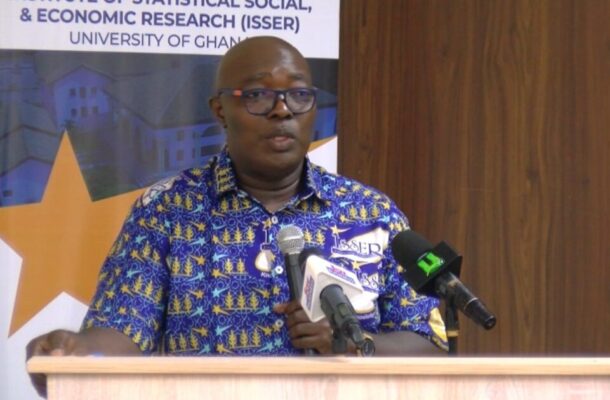
The Institute of Statistical, Social and Economic Research (ISSER) has called on Ghana’s government to ensure the country’s improving macroeconomic performance leads to more jobs and better living standards for ordinary citizens.
Presenting the institute’s assessment of the 2026 Mid-Year Budget in Accra, ISSER Director Professor Robert Darko Osei said recent progress in economic growth, fiscal consolidation and price stability would have limited value unless it brought tangible improvements to people’s daily lives.
“Economic growth, fiscal consolidation, price stability etc. should not be an end in themselves. How is the average Ghanaian’s daily ‘bread and butter’ better because of these positives?”
Professor Osei said Ghana’s economic policies should now place greater emphasis on employment-led growth rather than concentrating primarily on headline macroeconomic indicators.
His comments come as the services sector continues to make the largest contribution to Ghana’s economic expansion. ISSER said that growth must translate into employment opportunities, especially for young people, who remain a key focus of the country’s economic challenges.
“Focus on employment-led growth going forward. Expansion in the services sector should result in reduced unemployment, for example.”
The institute’s review also raised concerns about the possible long-term consequences of continued restraint in government spending.
ISSER acknowledged that limiting expenditure had helped support fiscal consolidation, but warned that excessive restraint could reduce investment in important infrastructure. Such investment, it said, would be necessary to maintain sustainable economic growth.
“Continued expenditure restraint could limit investment in critical infrastructure. We need to keep an eye on that while consolidating our gains.”
ISSER said the government would need to balance efforts to consolidate the country’s public finances with the infrastructure spending required to support economic activity and improve living conditions.
The institute also highlighted Ghana’s growing reliance on gold exports as a potential threat to economic stability. It warned that a significant fall in international gold prices could reduce export earnings and place pressure on the wider economy.
“Gold dominated export value makes exports susceptible to any significant price drops. Value addition will improve our economic complexity and offer buffers against price drops.”
According to ISSER, greater value addition within the gold sector would help Ghana develop a more complex and resilient economy. It said processing and adding value to exports could provide some protection if global gold prices declined sharply.
The institute’s assessment ultimately urged policymakers to pursue a broader approach to growthone that creates lasting employment, reduces the economy’s dependence on a narrow range of exports and ensures that the gains from macroeconomic stability are shared across the population.
ISSER said Ghana’s recent improvements in growth, fiscal management and price stability should be judged not only by economic data, but also by whether they produce meaningful benefits for citizens.






Popular News
No trending posts found.