
Keir Starmer resigns as Labour Leader and UK Prime Minister
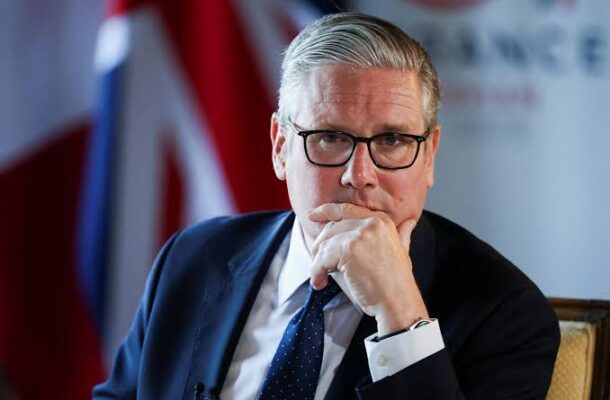
The British political landscape shifted dramatically on Monday as Prime Minister Keir Starmer declared his intention to relinquish both his grip on 10 Downing Street and his position atop the Labour Party, capitulating to mounting discontent within his own ranks after a string of electoral setbacks and internal rebellion.
The announcement, delivered outside the Prime Minister’s official residence shortly after 9:30 a.m. London time, brought to a head months of simmering tensions that had been steadily eroding Starmer’s authority since Labour’s disappointing performance in local elections this past May.
The decision marks a startling reversal of fortune for a leader who, less than two years prior, had marshalled Labour to a decisive general election victory in 2024, delivering one of the party’s most commanding parliamentary majorities in decades. Yet the political ground beneath him has shifted with astonishing speed.
Starmer indicated he would remain at his post throughout the party’s leadership selection process, a move designed to prevent a period of executive limbo and ensure continuity during the transition.
Financial markets responded with predictable nervousness — sterling weakened 0.19 percent against the dollar to trade at $1.3207, while yields on 10-year UK government bonds, known as Gilts, held flat at 4.8452 percent.
In remarks that betrayed visible emotion, Starmer reflected on his ascent to the premiership as “the proudest moment of my life,” pointing to achievements he believed his administration had delivered — rehabilitation of Britain’s standing in international affairs, inbound investment, and enhancements to workers’ protections.
Yet he acknowledged that his own parliamentary colleagues had transmitted a different message about his fitness to lead the party into its next electoral contest.
“I have heard the answer from my parliamentary party. I accept that answer with good grace. I will resign as leader of the Labour Party,” he stated.
The unravelling had been gathering momentum for weeks. A special election on June 18 saw Andy Burnham, the former mayor of Greater Manchester, secure a commanding victory that immediately positioned him as a potential contender for the party’s top job and, by extension, the keys to Number 10.
The result sent shockwaves through financial markets, with Gilt yields spiking on Friday in the aftermath.
The troubles had run deeper than electoral performance. Starmer and Finance Minister Rachel Reeves had found themselves under siege from within their own parliamentary caucus over fiscal policy decisions.
Welfare reforms proved controversial, while Reeves’ appointment of Peter Mandelson as US ambassador — a move that drew scrutiny over Mandelson’s associations with disgraced financier Jeffrey Epstein — further inflamed intra-party tensions.
A polling snapshot published Friday illustrated just how far Starmer’s standing had eroded. An Ipsos survey showed 52 percent of the British public believed he should vacate the Prime Minister’s office, a five-point increase from May. Only 35 percent believed he should remain.






Popular News
No trending posts found.