
Mahama declares war on “sex-for-jobs”
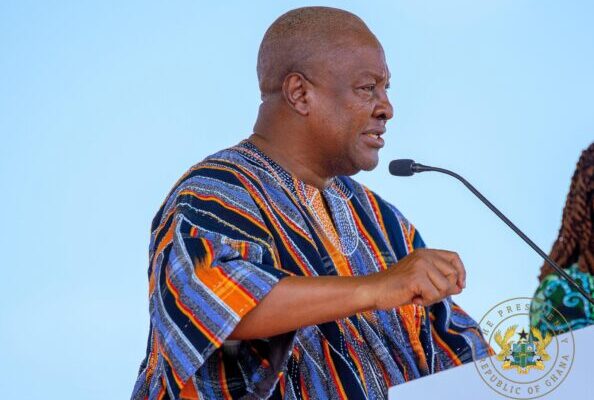
President John Dramani Mahama has called for urgent legislation to criminalise the practice of demanding romantic or sexual relationships in exchange for employment, describing it as exploitative and incompatible with a fair and inclusive labour system.
The President made the remarks during a town hall meeting in Koforidua on May 2, 2026, as part of his ongoing national engagement tour. His comments were in response to concerns raised by a female student about persistent gender inequality in employment opportunities, particularly the barriers women face despite having equal qualifications.
Mahama condemned what is commonly referred to as “sex-for-jobs,” noting that some employers abuse their positions of authority to demand inappropriate relationships before offering employment.
“It is unacceptable. It must stop,” he said, adding that the country must enact laws that impose strict penalties on individuals found culpable.
He further emphasised that any such conduct should be met with strong legal consequences to deter abuse and protect job seekers.
The issue of sexual exploitation in employment has long been a subject of public concern in Ghana, with civil society organisations and gender advocates repeatedly calling for stronger legal frameworks and enforcement mechanisms.
While existing laws address aspects of harassment and abuse, campaigners argue that gaps remain in directly targeting coercive practices tied to job opportunities.
In addressing the broader question of gender equity, President Mahama acknowledged that women continue to face systemic disadvantages in the labour market.
He noted that despite equal or higher qualifications, many women are sidelined in favour of their male counterparts.
Drawing from his observations on development projects, he praised women breaking into traditionally male-dominated fields, particularly engineering, describing their contributions as admirable and necessary for national development.
The President also reiterated his administration’s commitment to achieving gender balance in governance and public life.
He disclosed plans to work towards a 50-50 gender parity target by 2028, positioning it as part of a broader agenda to promote inclusivity and equal representation in decision-making spaces.
The announcement signals a potential policy shift that could see Ghana introduce more explicit legal provisions targeting sexual exploitation in employment, while reinforcing ongoing efforts to advance gender equality across sectors.





Popular News
No trending posts found.