Government pushes to make Ghana a regional gas hub
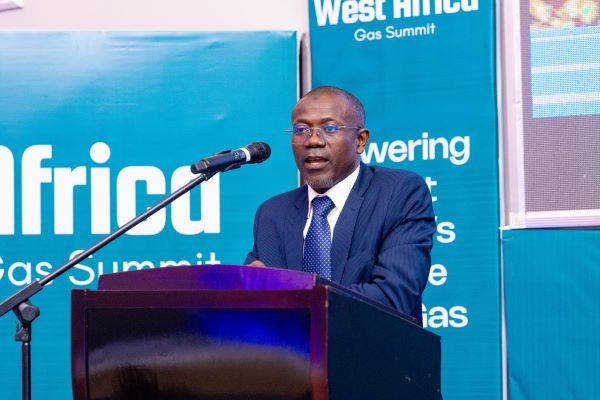
The government is positioning the country as a regional gas trading and distribution hub, betting on liquefied natural gas (LNG) imports, expanded domestic production and cross-border energy infrastructure to meet rising demand while supplying neighbouring markets across West Africa.
Speaking at the West Africa Gas Summit 2026 in Accra, Ghana National Petroleum Corporation (GNPC) Deputy Chief Executive Officer, Hamis Ussif, said the country’s projected gas demand is expected to outpace domestic supply despite ongoing investments in upstream production, making LNG imports a strategic necessity for both Ghana and the wider sub-region.
According to GNPC, gas demand is projected to reach about 840 million standard cubic feet per day (mmscfd) by 2030 and could approach one billion cubic feet per day over the longer term.
Domestic production, however, is expected to decline naturally as existing fields mature, even as operators commit fresh investments to sustain output.
“We are working with partners to increase investment and production, but even with those efforts and imports from Nigeria, we are not going to be able to meet expected demand from domestic production alone,” Ussif said.
To address the anticipated shortfall, the government is advancing an LNG import strategy centred on a Tema-based LNG terminal that is approximately 95 percent complete.
The facility is expected to handle up to 400 mmscfd of gas, providing supplies not only for the domestic market but also for neighbouring countries through existing and planned regional infrastructure.
GNPC sees the project as a regional rather than purely national asset. The corporation is exploring opportunities to supply gas to Togo and Benin through the West African Gas Pipeline (WAGP), while also assessing LNG bunkering and trucking solutions for countries without direct pipeline access, including Liberia, Sierra Leone, Burkina Faso and Mali.
The strategy comes as regional gas demand continues to grow. The operator of the West African Gas Pipeline, West African Gas Pipeline Company (WAPCo), reported record gas deliveries in 2025 and further increases in 2026, reflecting rising consumption across participating countries.
WAPCo Managing Director, Abiodun Bodunrin, said first-quarter average throughput rose to about 257,000 MMBtu, while peak delivery volumes reached roughly 315,000 MMBtu this year. Pipeline utilisation climbed to about 60 percent during peak periods in 2025, suggesting significant spare capacity remains available to support additional regional trade.
“The demand is there. The gas supply is there. What we need is collaboration across the value chain to ensure that we can unlock the next phase of growth,” Bodunrin said.
For Ghana, the regional opportunity is closely linked to domestic energy security. The country currently relies on production from the Jubilee, TEN and Sankofa fields, with Sankofa accounting for roughly 70 percent of domestic gas output. Sankofa currently produces about 280 mmscfd, with plans to increase production to 350 mmscfd through additional investment.
GNPC said partners in the Jubilee and TEN fields have committed approximately US$2 billion toward production expansion by 2028, while Sankofa partners are expected to invest a further US$1.5 billion to boost gas output.
Beyond existing assets, the corporation is pursuing new exploration and development opportunities. It is seeking partners to develop clusters of marginal discoveries that could unlock an estimated one billion barrels of oil and about 2.5 trillion cubic feet of gas.
The corporation is also advancing studies in the Voltaian Basin, where conservative estimates indicate potential resources exceeding 11 billion barrels of oil equivalent.
The broader strategy aligns with government ambitions to establish Ghana as a regional energy hub. Officials argue that gas has already transformed the country’s power sector, supporting electricity access rates of about 90 percent and helping improve system reliability.
GNPC is also supporting investments in gas processing, transmission and distribution infrastructure, including plans for a second gas processing plant and the development of a gas city grid in Tema to serve industrial users and power producers.
While the outlook for regional gas trade remains positive, challenges persist. WAPCo identified payment discipline, contract enforcement and supply reliability as key risks that could constrain future investment and expansion across the regional gas market.
GNPC believes growing demand, improving infrastructure and stronger regional cooperation create a significant opportunity for Ghana to emerge as a key gateway for gas distribution and energy trade in West Africa.






Popular News
No trending posts found.