
Ghana and Côte d’Ivoire agree on joint Cocoa pricing framework
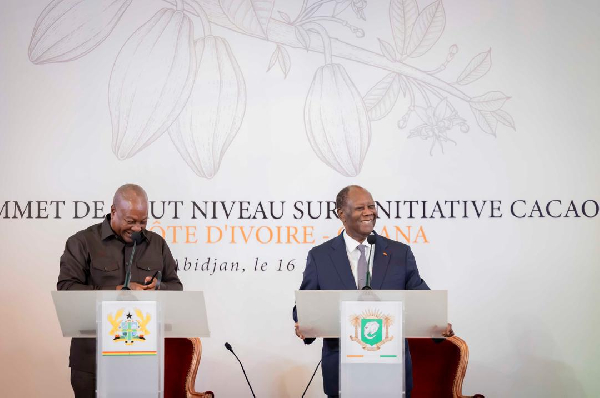
Ghana and Côte d’Ivoire have reaffirmed their commitment to strengthening cooperation in the cocoa sector, agreeing on a series of measures aimed at stabilising producer prices, enhancing research, and expanding regional collaboration among cocoa-producing countries in Africa.
The agreement was reached during the 7th Steering Committee Meeting of the Côte d’Ivoire–Ghana Cocoa Initiative (CIGCI) held in Abidjan and later presented at a high-level summit focused on the future of the cocoa industry.
The meeting was jointly chaired by Ghana’s Finance Minister, Dr Cassiel Ato Forson, and Côte d’Ivoire’s Minister of Agriculture, Bruno Nabagné Koné. Discussions centred on reviewing progress made under the initiative and identifying strategies to improve the long-term sustainability and competitiveness of the cocoa sector.
One of the key outcomes was a decision to harmonise farm-gate pricing systems in both countries to improve farmer incomes and promote market stability.
According to Dr Ato Forson, the two nations agreed to adopt measures that will strengthen coordination of cocoa trading systems, improve information sharing, and align their crop year calendars. Beginning with the 2026/2027 season, both countries will operate a common crop cycle running from September 1 to August 31.
To support the implementation of the new pricing strategy, a technical task force will be established to design a joint pricing framework and regularly review producer prices in order to minimise disparities between the two countries.
The committee also committed to enhancing collaboration between cocoa research institutions in Ghana and Côte d’Ivoire. Priority areas include combating cocoa swollen shoot virus disease and developing climate-resilient cocoa varieties capable of withstanding changing environmental conditions.
Participants further called for increased investment in research and development to ensure scientific innovations are effectively transferred to cocoa farmers.
The meeting also reviewed progress on the implementation of the African Regional Standard (ARS-1000) for sustainable cocoa production and urged stakeholders to intensify efforts to secure buyer recognition and premium payments associated with compliance.
In addition, the committee highlighted the importance of increasing value addition within cocoa-producing countries. Despite Africa producing about 80 percent of the world’s cocoa, the continent continues to receive only a small share of the profits generated from the global cocoa value chain.
To address this imbalance, members advocated for expanded cocoa processing capacity, stronger regional trade integration, and greater consumption of cocoa-based products across African markets.













Comments (0)