
Government moves to end indefinite renewal of Mining Concessions
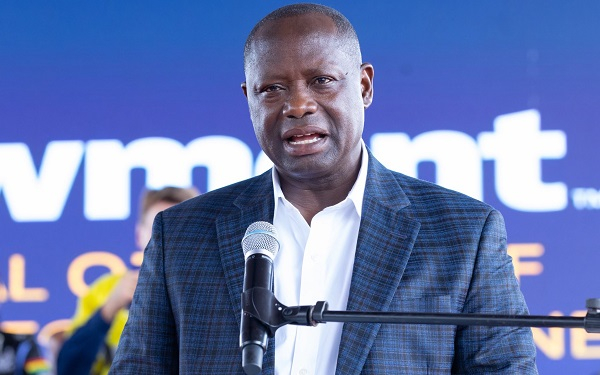
The Minister for Lands and Natural Resources, Emmanuel Armah-Kofi Buah, has announced plans by the government to abolish the long-standing practice of indefinite renewals of mining concessions, describing it as a major obstacle to active mineral exploration and investment in Ghana.
Speaking at the 98th Annual General Meeting of the Ghana Chamber of Mines in Accra, the Minister said the current system has enabled some concession holders to retain mining rights for decades without undertaking meaningful exploration or development activities.
According to him, certain operators have held concessions for as long as 25 to 30 years, repeatedly renewing their licences while waiting for external investors to finance their projects.
“Some people have concessions for 30 years and they are simply renewing their permits indefinitely while waiting for foreign investors from heaven to come and fund operations,” he said.
Mr Buah explained that the government intends to replace the existing framework with a stricter regime that will require concession holders to demonstrate tangible progress before renewals are granted.
He noted that the proposed approach mirrors practices in the oil and gas sector, where licence holders must show evidence of meeting work programme commitments and investment obligations before receiving extensions.
Under the proposed reforms, concession holders will initially be granted a three-year licence, followed by two successive two-year renewal periods, bringing the maximum duration to seven years.
“We will first give you three years, and you will come for renewal for two years and another two years, making seven years. All we have to do is to look at what you have done in meeting all the obligations and commitments. If you don’t find the gold, give it to another person,” he stated.
He added that concession holders who fail to fulfil their obligations within the stipulated period risk having their licences revoked and reassigned to operators prepared to actively develop the resource.
The Minister revealed that the reforms form part of broader amendments to Ghana’s mining regulatory framework, including revisions to the Minerals and Mining Act, 2006 (Act 703), and the National Mining Policy. The proposed legislation is currently before Cabinet and is expected to be submitted to Parliament for consideration.
Mr Buah stressed that the reforms are the result of extensive consultations with industry stakeholders and are intended to improve regulatory efficiency, strengthen accountability, promote environmental sustainability and increase local participation in the mining sector.
He expressed confidence that the changes would enhance investor confidence by creating greater clarity and discipline within the industry while ensuring that the country derives maximum value from its mineral resources.
The Minister assured stakeholders that government would continue engaging industry players, traditional authorities, civil society organisations and local communities throughout the legislative process to build broad consensus around the reforms.
He also called on the Ghana Chamber of Mines to support efforts aimed at closing policy gaps and strengthening compliance, describing collaboration between government and industry as essential to building a sustainable and responsible mining sector.
On the issue of illegal mining, popularly known as galamsey, Mr Buah reaffirmed the government’s commitment to tackling the menace, insisting that authorities would not relent in their efforts to protect the environment and the country’s water resources.
He stressed that the objective is not to prevent Ghanaians from engaging in mining activities but to ensure that mining is carried out responsibly and sustainably.
“We want everybody to do mining without destroying our water bodies and environment, without killing all of us and even the future for our generations,” he said.
The Minister added that government is strengthening regulation and enforcement within the small-scale mining sector while implementing environmental restoration initiatives such as the Tree for Life programme to reclaim degraded lands and promote ecological recovery.














Comments (0)