Mahama raises alarm over $78m health funding gap after US aid cuts
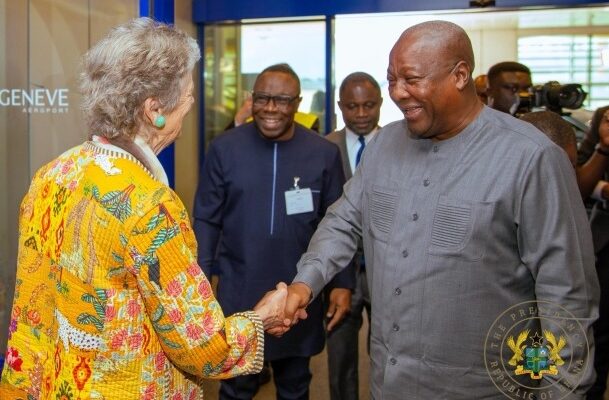
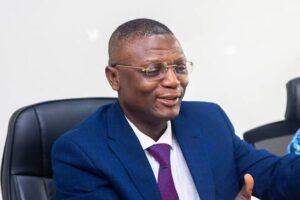
President John Dramani Mahama has disclosed that Ghana has lost approximately US$78 million in health sector support following cuts to some United States-funded aid programmes, a development he says is placing enormous strain on critical healthcare services across the country.
According to the President, the funding shortfall has affected several essential interventions, including malaria control programmes, HIV/AIDS treatment and testing services, maternal and child healthcare, nutrition support initiatives, and the supply of antiretroviral drugs.
President Mahama made the revelation while addressing delegates at the 79th World Health Assembly in Geneva on May 18, 2026, where he used the experience to highlight the growing vulnerability of African healthcare systems that remain heavily dependent on donor funding.
Speaking before global health leaders and policymakers, the President warned that the era of overreliance on foreign aid for healthcare financing was no longer sustainable.
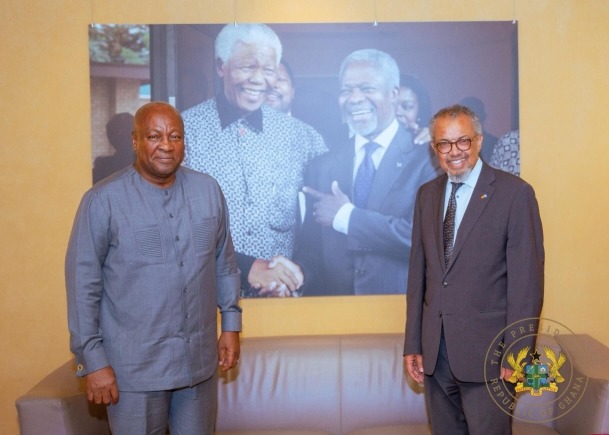
“The old system of donor dependency is past its sell-by date,” President Mahama declared during his address.
His comments come amid growing concerns across Africa following reductions in foreign development assistance from some Western countries, particularly in health-related programmes traditionally funded through bilateral and multilateral partnerships.
The withdrawal of support, he noted, has exposed deep structural weaknesses within many African healthcare systems and disrupted funding arrangements for life-saving programmes.
President Mahama further disclosed that the impact of the cuts had extended beyond Ghana, affecting operations of the World Health Organization itself, with some programmes reportedly scaled down and staffing levels reduced following the suspension of portions of US support.
According to him, the ripple effects of aid reductions across Africa could have severe social and economic consequences, warning that as many as 5.7 million people on the continent could be pushed into poverty by the end of 2026 due to worsening healthcare and economic conditions.
The President said Ghana was now being compelled to accelerate efforts toward self-financing and domestic resource mobilisation in the health sector in order to cushion citizens against the effects of declining external assistance.
As part of government’s response measures, President Mahama said the administration had removed the cap on the National Health Insurance Fund, a move he indicated has already freed an additional GH¢3 billion for healthcare expenditure.
He added that the government’s 2026 Budget has allocated GH¢34 billion to the health sector to support ongoing reforms and sustain healthcare delivery despite the donor funding gap.
The President also announced plans to intensify the use of technology and digital systems within the health sector, including artificial intelligence tools aimed at detecting fraudulent claims under the National Health Insurance Scheme (NHIS).
According to him, the deployment of digital monitoring systems forms part of broader efforts to improve efficiency, reduce leakages, and ensure value for money within the healthcare financing structure.
President Mahama further revealed that Ghana has begun implementing a free primary healthcare programme designed to improve access to basic healthcare services, especially in rural and underserved communities where healthcare access remains a challenge.
Despite progress made under the NHIS, the President acknowledged that significant coverage gaps still remain within the system.
He stated that the National Health Insurance Scheme currently covers about 66 percent of Ghana’s population, leaving nearly one-third of citizens outside the insurance net.
The President also touched on the long-term strategy to reduce dependence on international vaccine financing support, stating that the country hopes to transition away from Gavi assistance by the year 2030.
Gavi, the Vaccine Alliance, has for years supported vaccine procurement and immunisation programmes in several lower-income countries, including Ghana.
President Mahama’s remarks also carried a broader call for reforms within the global health financing architecture.
He cautioned against global reform efforts that merely preserve existing institutions without addressing systemic inefficiencies and inequalities affecting developing nations.
“We cannot prioritise institutional comfort over human survival,” he stressed.The issue of declining donor support has increasingly become a major concern for many African governments following shifts in global economic priorities, geopolitical tensions, and rising domestic fiscal pressures in donor countries.
Over the years, Ghana’s health sector has benefited significantly from external funding support, particularly in the fight against HIV/AIDS, malaria, tuberculosis, maternal mortality, and child healthcare programmes.
However, health experts have repeatedly warned that excessive dependence on donor financing leaves critical national programmes vulnerable to abrupt policy changes by foreign governments and international agencies.










Comments (0)