
Nii Lantey Vanderpuye leads polls for NDC chairmanship race
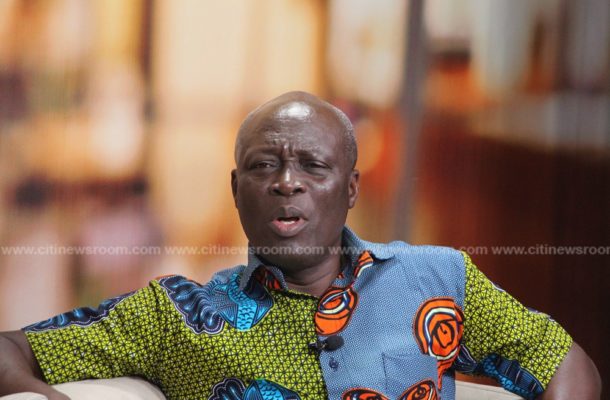
The National Democratic Congress confronts institutional divergence between delegate preference for new chairmanship leadership and surprising institutional resistance to replacing its current national chairman, with tracking research revealing that the party’s rank-and-file appears fractured between appetite for organizational renovation and reluctance to unseat an incumbent whose institutional tenure has yet to face decisive electoral judgment.
Nii Lantey Vanderpuye, former Odododiodio parliamentarian and erstwhile Youth and Sports Minister, has crystallised into the leading contender for the NDC’s National Chairmanship through accumulation of delegate backing transcending all four regional constituencies measured by Global Info Analytics’ latest delegate tracking exercise.
Vanderpuye commands 26.8 percent of surveyed delegate preference — a commanding plurality positioning him substantially ahead of competing candidates whilst simultaneously falling far short of majority consolidation.
Samuel Ofosu-Ampofo, the party’s former National Chairman, maintains institutional relevance through secondary positioning at 19.3 percent, his retained delegate support suggesting that nostalgia for his prior chairmanship tenure retains emotional resonance within party constituencies.
Additional candidates fragment the remaining delegate preference: NDC Vice-Chairman Awudu Sofo Azorka captured 6.4 percent; Ghana’s Saudi Arabian ambassador Alhaji Said Sinare secured 6.3 percent; and Akwasi Opong-Fosu, the current Ghana Investment Promotion Centre Board Chairman, accumulated merely 1.7 percent.
Yet the chairmanship race confronts a paradoxical institutional constraint: despite Vanderpuye’s clear delegate advantage and the emergence of competing candidates, 61 percent of surveyed delegates affirmed that incumbent National Chairman Johnson Asiedu Nketia should remain in his current position — a finding suggesting that organizational appetite for chair rotation coexists uncomfortably with institutional reluctance to remove Asiedu Nketia from his role.
Vanderpuye’s dominance proves geographically distributed. He registered 32 percent support within the swing regional bloc encompassing Greater Accra, Central and Western regions.
He captured 24 percent within the Akan-speaking bloc, 25 percent among Volta and Oti constituencies and 26 percent across northern regional blocs — leadership across all measured geographic segments despite the plurality rather than majority character of his aggregate support.
The presidential positioning for the 2028 general election reveals institutional complexity exceeding chairmanship dynamics. Asiedu Nketia maintains nominal leadership within the presidential preference hierarchy at 27 percent — a decline from 29 percent recorded in April polling and a figure substantially below what institutional incumbency might ordinarily command.
Finance Minister Dr Cassiel Ato Forson has emerged as the second-tier presidential preference at 22 percent, an elevation from 19 percent in the previous measurement and a trajectory suggesting accelerating institutional consolidation around his candidacy.
The remaining presidential aspirants have encountered declining support patterns. Education Minister Haruna Iddrisu experienced the steepest deterioration, plummeting from 11 percent in April to 6 percent in the current measurement — a collapse suggesting either active delegate defection or renewed recognition that Iddrisu’s presidential ambitions encounter institutional constraint.
Vice-President Naana Jane Opoku-Agyemang declined from 8 percent to 7 percent. Chief of Staff Julius Debrah descended from 8 percent to 5 percent. Professors Joshua Alabi and Agriculture Minister Eric Opoku each consolidated minimal support at 1 percent.
The undecided delegate population expanded from 24 percent in April to 30 percent in July — an enlargement suggesting that as the party contemplates 2028 electoral positioning, institutional clarity regarding preferred leadership has diminished rather than crystallised.
A direct head-to-head matchup between Asiedu Nketia and Ato Forson produces statistically indistinguishable outcomes: Asiedu Nketia secured 34 percent, Ato Forson obtained 33 percent, whilst 33 percent of delegates remained undecided.
The near-perfect numerical equivalence renders the potential presidential contest institutionally unpredictable — a circumstance in which either candidate possesses plausible pathway toward presidential nomination through modest delegate mobilisation or shifts in undecided populations.
The survey encompassed 5,637 NDC delegates distributed across all sixteen administrative regions. Global Info Analytics employed probability random sampling methodology and computer-assisted telephone interviews, establishing 99 percent confidence level with margin of error of plus or minus 1.7 percentage points.
The fieldwork was conducted between July 8 and 14, 2026.
The data portrait depicts a party confronting leadership succession questions without institutional consensus regarding preferred directions. Chairmanship preferences have crystallised around Vanderpuye whilst institutional sentiment retains attachment to Asiedu Nketia’s continuance.
Presidential preference remains fragmented across multiple candidates with declining support across almost all contenders save Ato Forson, whose trajectory suggests emerging consolidation as alternative to Asiedu Nketia’s aging presidential candidacy.






Popular News
No trending posts found.